In rhythmic gymnastics, every second counts—literally. A perfectly executed routine can lose crucial points if it exceeds or falls short of the required time limit. Understanding the timing rules is not just a technicality; it’s essential for optimizing scores and avoiding avoidable deductions. Let’s explore how timing is measured and what you can do to stay on track.
Timing Basics: When the Clock Starts and Stops
The stopwatch begins as soon as the gymnast starts moving, not when the music begins. A short musical intro of up to 4 seconds is allowed without any body or apparatus movement.
Timing ends when the gymnast becomes completely motionless—not when the music finishes. This subtle distinction is vital for accurate scoring.
Duration Limits by Category
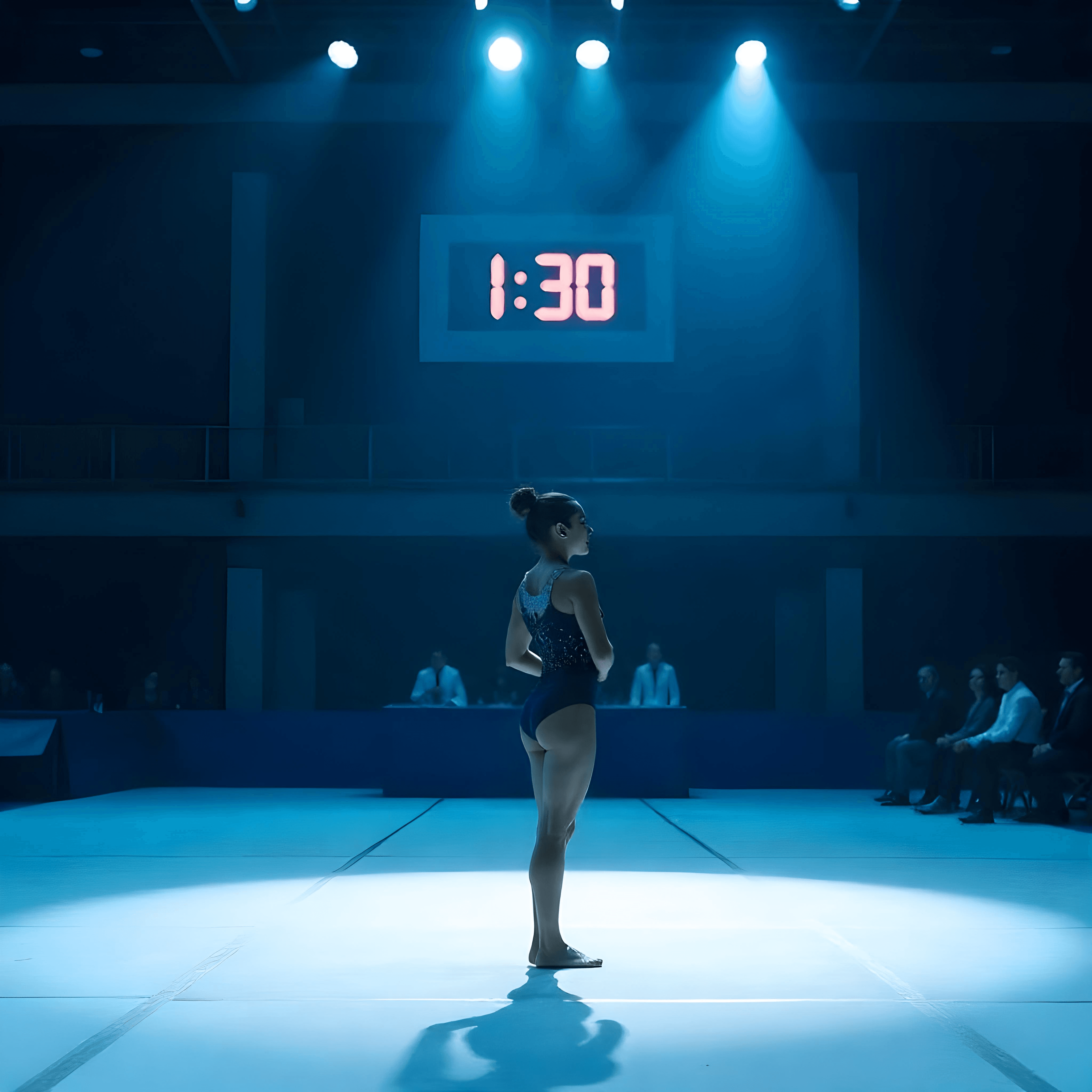
Individual Routines: Must last between 1’15” (75 seconds) and 1’30” (90 seconds).
Junior Group Routines: Range from 2’15” to 2’30”.
Any deviation from this timeframe, even by a second, results in penalties.
Time Deduction Formula
Deductions are precise and enforced in full-second increments:
0.05 points deducted per extra or missing second.
A routine that ends at 1’30.99” is safe.
But at 1’31.00”, a 0.05 deduction is applied.
This margin may seem minor, but in high-level competition, it can be the difference between a podium finish and missing out.
Who Tracks the Time?
Time Judges, positioned at the event, are responsible for:
Starting the clock based on the gymnast’s first movement.
Verifying the total routine time.
Calculating any time violations.
Reporting deductions to the President of the Superior Jury.
They also note scenarios where the gymnast fails to take a final pose or exits the area prematurely—both of which can affect when the timer stops.
Timing and Music: What You Should Know
Up to 4 seconds of music without motion is allowed at the beginning.
Gymnasts must not start movement during this intro.
Ending the routine before or after the music ends is not grounds for deduction—it’s about the body and apparatus movement, not the audio.
Common Timing Mistakes
Starting a few seconds late after music begins
Exceeding the upper limit by even 0.01 seconds
Forgetting the final pose due to lost apparatus
Misunderstanding when the routine actually ends
Timing Tips for Gymnasts and Coaches
Practice with a stopwatch: Don't rely only on music duration.
Simulate competition scenarios during training.
Use music editors to ensure musical intros stay within the 4-second limit.
Take final poses seriously—they signal routine completion and stop the clock.
Timing is more than just a countdown—it’s part of your performance and discipline. A routine that is technically perfect can still fall short in the scoring if the timing is not precise. With good practice habits and awareness, you can avoid costly time penalties and maintain your competitive edge.