Yoga practice combines breath, movement, and focus, creating a balanced path to health and awareness. Among the foundational sequences are Surya Namaskar A and B (Sun Salutations), followed by standing, balancing, seated, and finishing postures. Each asana (posture) carries a meaning, a story, and unique physical benefits.
Surya Namaskar – The Sun Salutation
Surya namaskar: Surya = Sun, namaskar = salutation; a greeting to the Sun.
Within Surya Namaskar A and B, we find the following postures:
Samasthitih: sama = equal, sthitih = standing firmly; a balanced, stable posture.
Uttanasana: uttana = intense stretch; forward bend with an intense posterior stretch.
Chaturanga dandasana: chatur = four, anga = limbs, danda = staff; staff posture supported on four limbs.
Adho mukha svanasana: adho = downward, mukha = face, svana = dog; downward-facing dog.
Urdhva mukha svanasana: urdhva = upward, mukha = face, svana = dog; upward-facing dog.
Utkatasana: utka = powerful, fierce; the powerful posture.
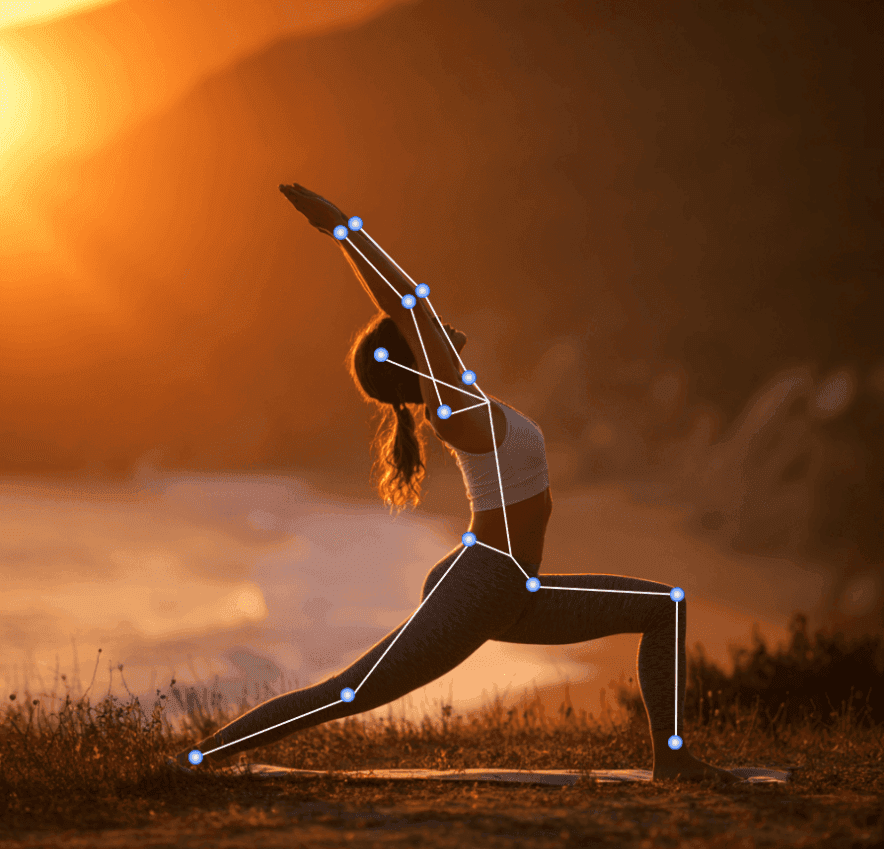
Virabhadrasana: Virabhadra = “virtuous hero”; posture of the warrior Virabhadra, a manifestation of Shiva’s wrath.
Standing Postures
Padangusthasana: pada = foot, angustha = big toe; big toe posture.
Padahastasana: pada = foot, hasta = hand; hand-under-foot posture.
Utthita trikonasana: utthita = extended, tri = three, kona = angle; extended triangle posture.
Parivritta trikonasana: parivritta = twisted, tri = three, kona = angle; twisted triangle posture.
Utthita parshvakonasana: utthita = extended, parshva = side, kona = angle; extended side angle posture.
Parivritta parshvakonasana: parivritta = twisted, parshva = side, kona = angle; twisted side angle posture.
Prasarita padottanasana: prasarita = spread, pada = foot, uttana = intense stretch; wide-legged intense forward stretch.
Parshvottanasana: parshva = side, uttana = intense stretch; intense side stretch posture.
Balance and Stability Postures
Utthita hasta padangusthasana: extended hand-to-big-toe posture.
Ardha baddha padmottanasana: half-bound lotus forward bend.
Utkatasana: powerful posture.
Virabhadrasana A and B: warrior postures, symbolizing strength and determination.
Seated and Floor Postures
Dandasana: staff posture, sitting tall with straight legs and spine.
Paschimottanasana: intense western stretch, forward bend for the back.
Purvottanasana: intense eastern stretch, lifting the front body.
Ardha baddha padma paschimottanasana: half-bound lotus forward bend.
Triang mukhaekapada paschimottanasana: three-limbed forward bend.
Janu sirshasana: head-to-knee posture.
Marichyasana: posture dedicated to the sage Marichi.
Navasana: boat posture.
Bhujapidasana: shoulder-press posture.
Kurmasana & Supta kurmasana: turtle and sleeping turtle postures.
Garbhapindasana: embryo-in-the-womb posture.
Kukkutasana: rooster posture.
Baddha konasana: bound angle posture.
Upavishtha konasana: seated angle posture.
Supta konasana: reclined angle posture.
Supta padangusthasana: reclined hand-to-big-toe posture.
Chakrasana: wheel posture.
Ubhaya padangusthasana: both-hands-to-toes posture.
Urdhva mukha paschimottanasana: upward-facing forward bend.
Setubandhasana: bridge posture.
Finishing Postures
Urdhva dhanurasana: upward bow (wheel) posture.
Salamba sarvangasana: supported shoulder stand.
Halasana: plow posture.
Karnapidasana: ear-pressure posture.
Urdhva padmasana: upward lotus posture.
Pindasana: embryo posture.
Matsyasana: fish posture.
Uttana padasana: extended-leg posture.
Sirshasana: headstand.
Baddha padmasana (yogamudra): bound lotus.
Padmasana: lotus posture.
Uthpluthih (Tolasana): balance lift.
Shavasana: corpse posture; final relaxation.
The journey through Surya Namaskar and the sequence of asanas is not just about movement, but about discipline, presence, and inner awareness. Each posture carries ancient wisdom, aligning body and mind while honoring tradition.