A volleyball spike is one of the most explosive movements in team sports. From the outside, it may look like a simple combination of jump and arm speed, but an effective attack depends on much more than power alone. The best hitters create force through timing, body alignment, approach rhythm, and controlled movement sequencing. When these elements work together, the athlete can generate a stronger, cleaner, and more consistent spike.
The attack begins before the athlete leaves the floor. Approach timing is one of the most important parts of spike mechanics because it determines how well the hitter connects with the setter and the ball. If the approach starts too early, the athlete may wait in the air and lose power. If it starts too late, the hitter may rush the jump and contact the ball from a poor position. A well-timed approach allows the athlete to build momentum and arrive at the right point with control.
Footwork also plays a major role in attack efficiency. The final steps before takeoff help convert horizontal movement into vertical power. If the steps are too narrow, unstable, or poorly coordinated, the athlete may lose balance before the jump. Strong hitters use their approach to create rhythm, load the lower body, and prepare the hips, core, and shoulders for the swing.
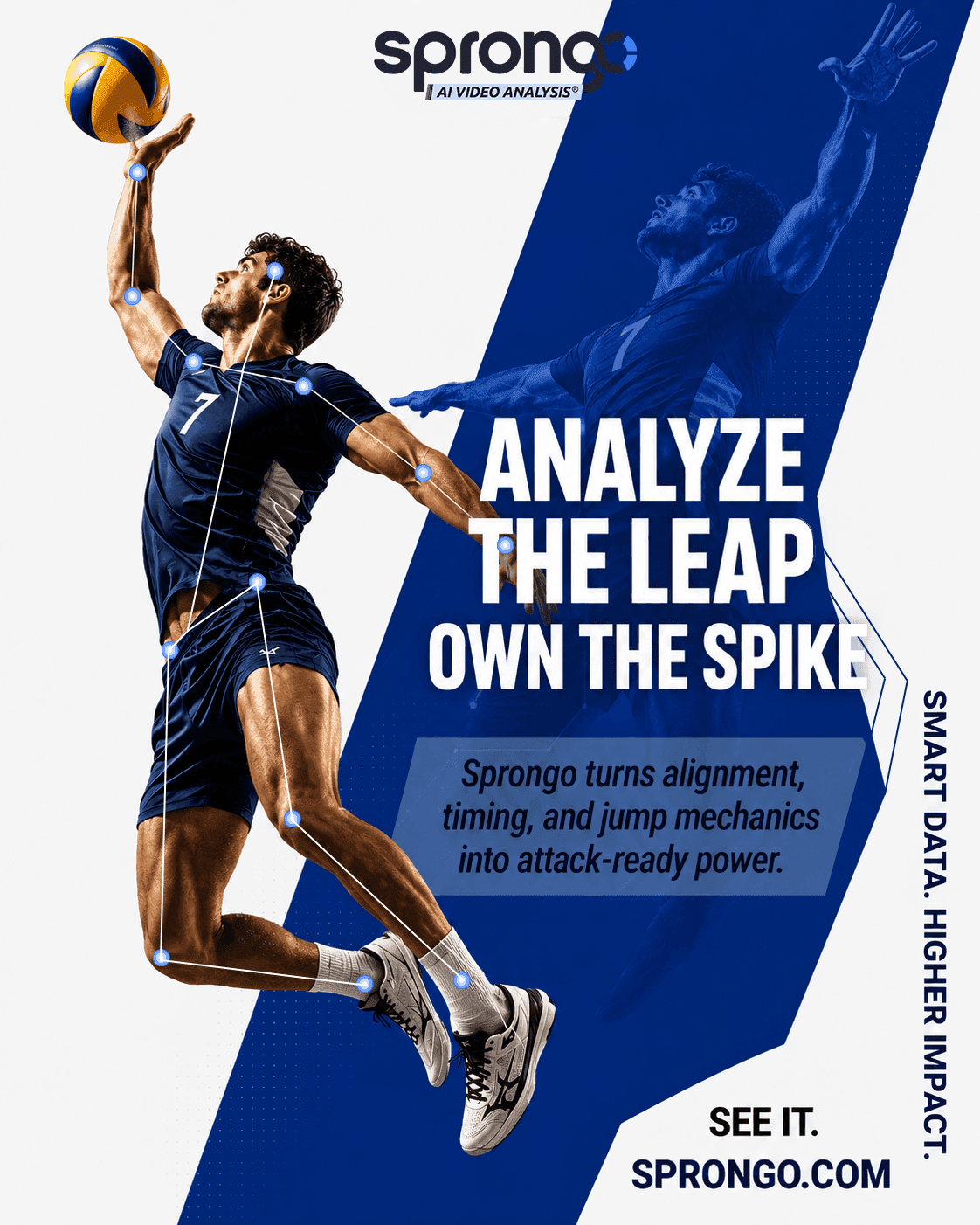
Body alignment is another key part of a successful spike. The athlete must manage the position of the hips, trunk, shoulders, and hitting arm while moving quickly through the air. If the body opens too early or the athlete loses control through the core, the swing may become less efficient. Proper alignment helps transfer force from the lower body through the torso and into the arm, creating a more powerful and controlled attack.
The arm swing is often the most visible part of the spike, but it should not work alone. A strong spike depends on the connection between jump mechanics, trunk rotation, shoulder position, elbow movement, and wrist action. When the arm swing is properly sequenced, the athlete can create speed without forcing the motion. When the sequence breaks down, power and accuracy can suffer.
Contact point is another detail that separates effective attackers from inconsistent ones. Hitting the ball too low, too far behind the body, or too close to the net can limit attack options and reduce control. A strong contact point allows the athlete to attack with better angle, speed, and direction. Coaches often look closely at where the athlete contacts the ball in relation to the shoulder, torso, and jump position.
Video analysis is especially useful for volleyball spike mechanics because the movement happens quickly. During live play, coaches may see the result of the attack, but not always the reason behind it. A hitter may miss because of timing, approach rhythm, body position, or contact point. Slow-motion review makes it easier to identify which part of the movement needs attention.
Visual feedback also helps athletes understand corrections more clearly. A coach may tell a player to “reach higher,” “wait longer,” “open later,” or “control the approach,” but those cues become more effective when the athlete can see the exact moment where the movement changes. Video gives players a clearer connection between what they feel and what is actually happening.
For teams, reviewing spike mechanics also supports better coordination. An attacker’s timing depends on the setter, the tempo of the play, defensive pressure, and court positioning. Video review helps coaches analyze both the individual movement and how that movement fits within the team system. This makes feedback more complete and more practical for game situations.
Platforms like Sprongo can help coaches and athletes break down volleyball attacks with greater clarity. Slow-motion playback, visual feedback, and side-by-side comparison make it easier to study approach timing, jump mechanics, alignment, and contact position. Instead of only evaluating whether the spike was successful, coaches can review how the movement was created.
A powerful spike is not just about jumping higher or swinging harder. It is about creating attack-ready power through efficient movement. When timing, alignment, and jump mechanics work together, volleyball athletes can attack with more control, consistency, and confidence.