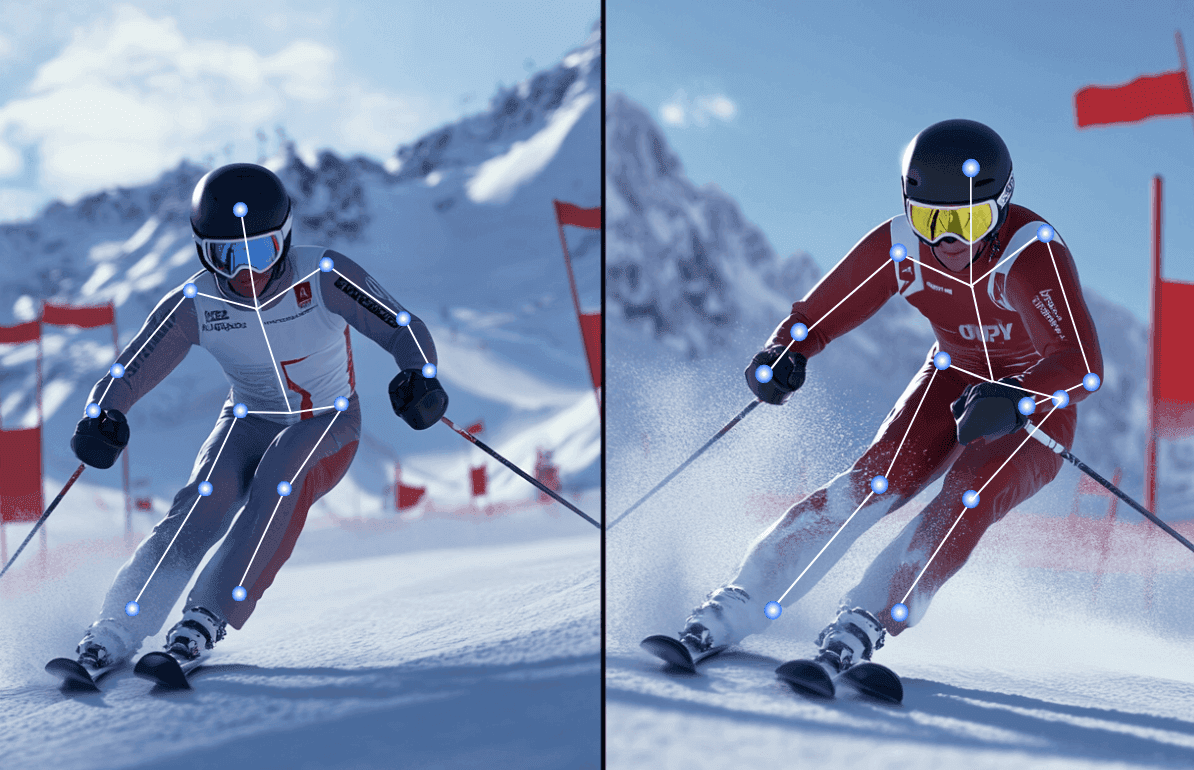
In skiing, understanding the difference between training and performing is critical. Too often, athletes bring a training mindset into performance focusing on drills, technique, or internal cues rather than trusting their preparation and executing with clarity. At Sprongo, we believe that developing this distinction is key to unlocking high-level performance.
Training: The Zone of Experimentation
During training, athletes are encouraged to:
Focus on technical precision
Break down skills into repeatable parts
Explore adjustments and corrections
Accept failure as a feedback mechanism
This is the space for refinement. Sprongo’s AI-powered video analysis supports this phase by offering:
Frame-by-frame breakdowns of motion
Side-by-side comparisons with previous attempts or ideal examples
Objective feedback loops for improvement
Performing: The Zone of Execution
Once in a competitive environment, the mindset must shift. Performing is not about experimentation — it’s about execution. The athlete must:
Rely on learned patterns
Trust their training
Focus externally (e.g., terrain, timing, rhythm)
Stay fully present in the moment
Sprongo helps prepare for this by:
Allowing athletes to review and visualize successful runs
Highlighting key decision points that align with performance outcomes
Building confidence through reinforced video feedback
The Danger of Mixing Mindsets
Many breakdowns happen when an athlete tries to train during performance overthinking technique, second-guessing decisions, or trying to “fix” something mid-run. This creates hesitation and disrupts flow.
Sprongo enables clear transitions by helping coaches structure training with purpose and helping athletes internalize what works, so they can let go and just ski when it matters.
Creating Intentional Separation
Coaches and athletes can use Sprongo to:
Tag video clips as “training” or “performance”
Track how well training goals transfer to performance conditions
Identify mindset patterns that lead to success
This creates a culture where both training and performance are respected as distinct, but connected phases of mastery.