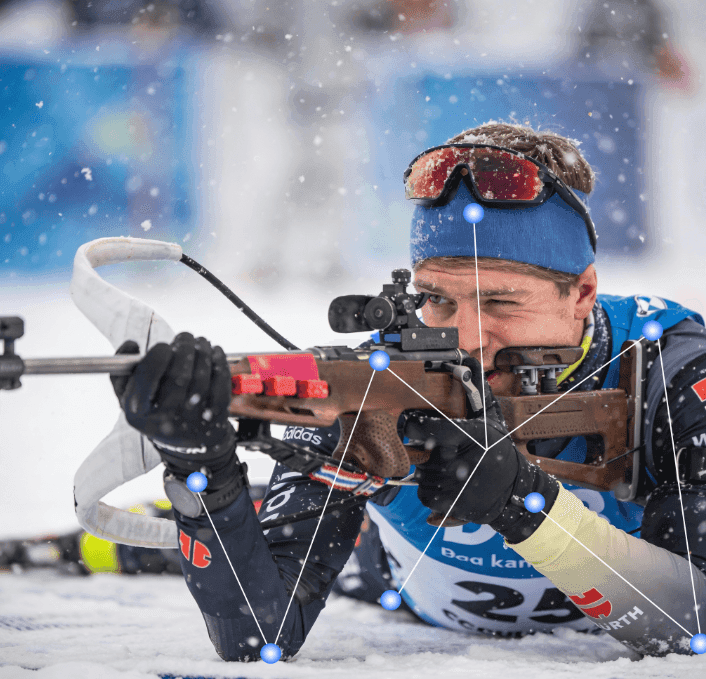
Biathlon doesn’t allow the body to work alone.
Few winter sports place athletes in such direct conflict with themselves. Heart rate spikes. Muscles burn. Breathing refuses to settle. And then, suddenly, everything must stop — not physically, but mentally. Precision is no longer optional. It’s required.
Biathlon lives in that transition. From motion to stillness. From effort to control. Skiing demands endurance and pacing, but shooting demands silence — not in the environment, but in the mind. The challenge isn’t hitting the target. It’s arriving at the target with enough clarity left to aim.
What makes biathlon unforgiving is how quickly consequences appear. A missed shot isn’t abstract. It’s immediate. Penalty loops, lost time, and momentum slipping away in front of everyone. There’s no room to argue with the result. The sport answers instantly.
The best biathletes don’t rush recovery. They understand how to slow the moment down internally, even when the race refuses to do the same. Control isn’t found by forcing calm — it’s built through repetition, routine, and trust in preparation.
Biathlon also exposes discipline over time. One strong leg doesn’t win races. One perfect shooting round doesn’t either. Success comes from holding form across changing conditions, variable snow, and rising pressure as margins disappear.
This is why biathlon remains one of the most mentally demanding winter disciplines. It doesn’t just test stamina. It tests whether clarity can survive exhaustion.
The Athletes Who Stay Clear When It Counts
As the Winter Games approach this February, attention turns to biathletes who have mastered that balance.
Johannes Thingnes Bø continues to define modern biathlon with an ability to recover focus faster than anyone else in the field. His success isn’t built on perfection, but on how quickly mistakes are absorbed and corrected.
On the women’s side, Elvira Öberg has reshaped expectations around speed and aggression, while athletes like Dorothea Wierer bring experience and composure that only years at the top can produce.
These competitors don’t chase calm. They create it — repeatedly — under conditions designed to erase it.
Where Sprongo Fits
Biathlon rewards systems that understand transitions. From effort to decision. From noise to focus. From complexity to clarity.
Sprongo exists in that same space. It’s built to help teams read behavior, anticipate shifts, and act before pressure turns uncertainty into loss. When performance depends on recognizing patterns early, preparation becomes the real advantage.
Biathlon doesn’t wait for recovery.
Neither do complex systems.