Swimming is one of the most technical sports because the athlete is constantly moving through an environment that makes feedback difficult. Unlike running, golf, or basketball, swimmers cannot easily see their own movement while they perform. They rely heavily on feel, rhythm, and coaching cues from the pool deck. The problem is that what a swimmer feels in the water is not always what is actually happening.
This is why swim stroke analysis has become such an important part of modern coaching. Small technical errors in body position, breathing, hand entry, kick timing, and rotation can create unnecessary drag and reduce efficiency. These mistakes may not always look dramatic from the pool deck, but they can have a major impact on speed, endurance, and stroke consistency over time.
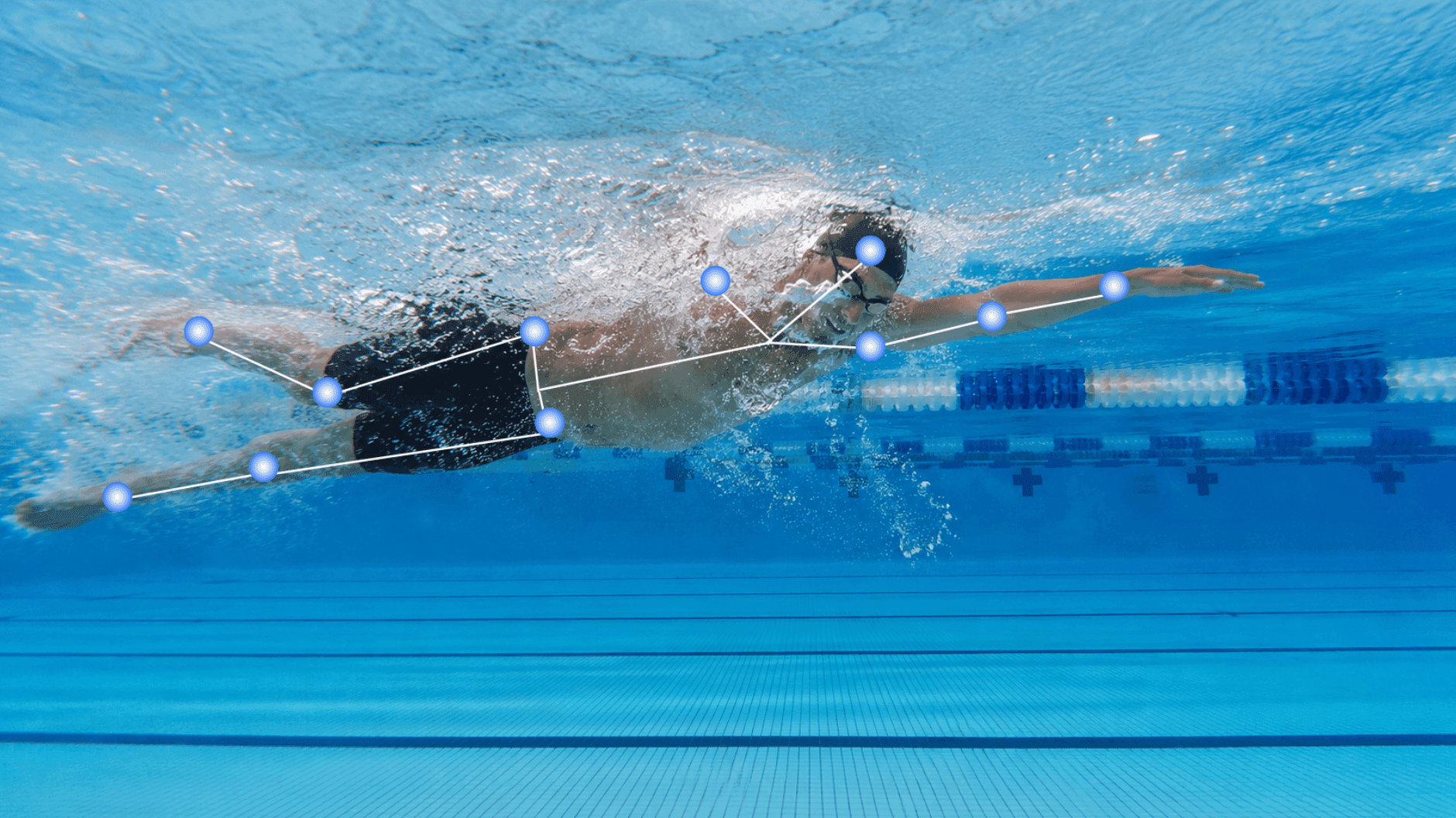
One of the most common issues video analysis can reveal is poor body position. Many swimmers think they are staying long and balanced in the water, but video review may show sinking hips, excessive head lift, or a body line that creates drag. Even small alignment problems can make each stroke less efficient because the swimmer has to work harder to maintain forward momentum.
Breathing timing is another area where visual feedback is extremely valuable. In freestyle, athletes often lift the head too much or rotate late during the breath. This can interrupt rhythm, affect body balance, and cause the hips or legs to drop. Because breathing errors happen quickly and feel natural to the swimmer, they are often difficult to correct without seeing them clearly on video.
Hand entry and catch position are also key parts of an efficient swim stroke. A hand that crosses the center line, enters too wide, or drops too early can reduce power and create unnecessary movement through the shoulders. Coaches can often spot major issues from above the water, but video review gives a clearer look at exactly where the stroke begins to lose efficiency.
Hip rotation is another technical detail that can be difficult to judge without visual analysis. Efficient swimmers use controlled rotation to support reach, breathing, and power through the pull phase. Too little rotation may limit stroke length, while excessive rotation can disrupt balance and rhythm. Watching the stroke frame by frame helps coaches and swimmers understand whether rotation is helping movement or creating instability.
Kick timing is also closely connected to stroke efficiency. Some swimmers kick too aggressively without improving propulsion, while others lose rhythm because the kick does not support the upper body movement. Video analysis allows coaches to review how the kick, hips, and arm stroke work together instead of looking at each part in isolation.
Another important benefit of video analysis in swimming is that it helps swimmers understand technique in a more objective way. Verbal feedback is useful, but many technical corrections are hard to imagine while moving through the water. When athletes can see their own stroke, they are more likely to understand what the coach is asking them to change and why that change matters.
For coaches, video review also makes progress easier to track. A swimmer may feel faster or more efficient after a technique adjustment, but comparing footage over time gives a clearer view of whether body position, timing, and stroke mechanics are actually improving. This creates a more structured development process and helps avoid relying only on subjective feedback.
Platforms like Sprongo can support this process by helping coaches and athletes review swimming technique with clearer visual feedback. Slow-motion playback, side-by-side comparison, and frame-by-frame review make it easier to identify stroke mistakes and communicate corrections in a way swimmers can understand. Instead of guessing what is happening below the surface, coaches can use video to make technique more visible and measurable.
In swimming, small details matter. A slightly mistimed breath, a dropped elbow, or poor body alignment may seem minor, but repeated over hundreds or thousands of strokes, these mistakes can limit performance. Video analysis gives swimmers and coaches a clearer way to identify those details, refine technique, and build more efficient movement in the water.