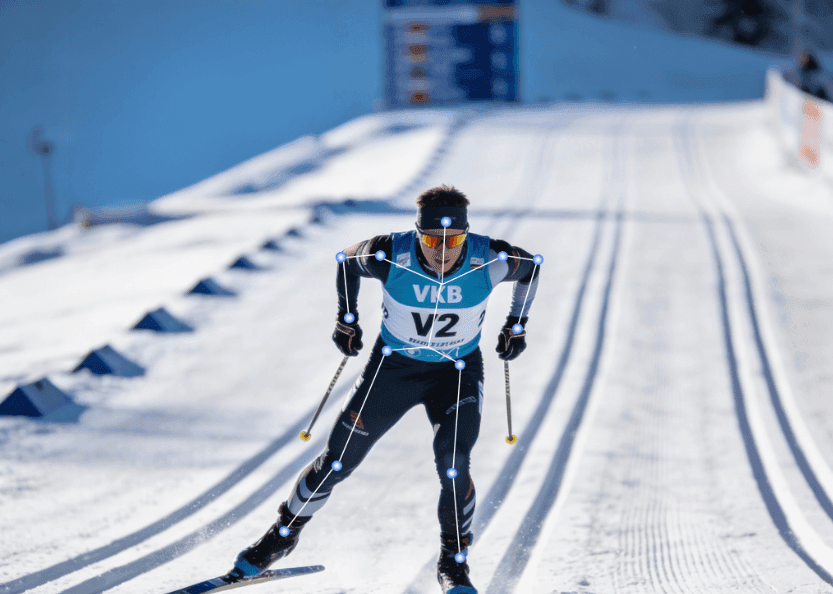
Cross-country skiing doesn’t offer shortcuts.
There are no sudden bursts that erase earlier mistakes, no technical moments that allow an athlete to reset the balance. Once the rhythm is set, it must be carried — across distance, terrain, and time. What begins as effort slowly becomes exposure.
Unlike alpine disciplines, where risk arrives suddenly, cross-country skiing stretches pressure over hours. The body is tested first. Then the mind. Fatigue doesn’t announce itself loudly; it creeps in quietly, changing posture, breathing, and decision-making long before it feels overwhelming.
The challenge isn’t simply moving forward. It’s choosing how to move forward when energy starts to disappear. Pace becomes a negotiation. Push too early and the cost arrives later. Hold back too long and the gap becomes permanent. Every decision is cumulative, and every mistake stays with the skier.
Cross-country skiing rewards awareness more than aggression. Athletes constantly read snow texture, elevation, and their own physical signals. Small adjustments — a slightly shorter stride, a delayed push, a change in cadence — can determine whether endurance holds or collapses.
What makes the sport especially demanding is its honesty. There’s no opponent to react to directly, no tactical contact, no external distraction. The course doesn’t adapt. The distance doesn’t shrink. The only variable is how well the athlete manages themselves over time.
That’s why the strongest performances rarely look dramatic. They look measured. Controlled. Almost restrained. Success comes from understanding limits without ever fully reaching them too early.
Cross-country skiing doesn’t celebrate speed alone.
It celebrates control sustained under fatigue.
The Athletes Who Redefine Distance
As the Winter Games approach this February, attention turns to skiers who have mastered that balance between patience and power.
From Norway, Therese Johaug has long defined dominance through relentless pacing and an unmatched ability to sustain effort over distance. On the men’s side, Johannes Høsflot Klæbo combines efficiency with tactical intelligence, proving that endurance doesn’t have to sacrifice clarity.
Athletes like Frida Karlsson and Iivo Niskanen continue to shape the modern field, each bringing a different interpretation of control — whether through strength on climbs or discipline on flatter sections.
These skiers don’t win by forcing outcomes.
They win by managing them — kilometer after kilometer.
Where Sprongo Fits
Cross-country skiing rewards those who understand systems over time. Patterns matter. Early signals matter. Small inefficiencies compound into decisive gaps.
Sprongo exists for the same reason. It’s built to help teams recognize behavior early, understand long-term patterns, and act before pressure accumulates into failure. When endurance matters — in performance, operations, or decision-making — clarity becomes the real advantage.
Cross-country skiing doesn’t hide fatigue.
Sprongo doesn’t hide complexity.
Both reward those who learn to manage them.