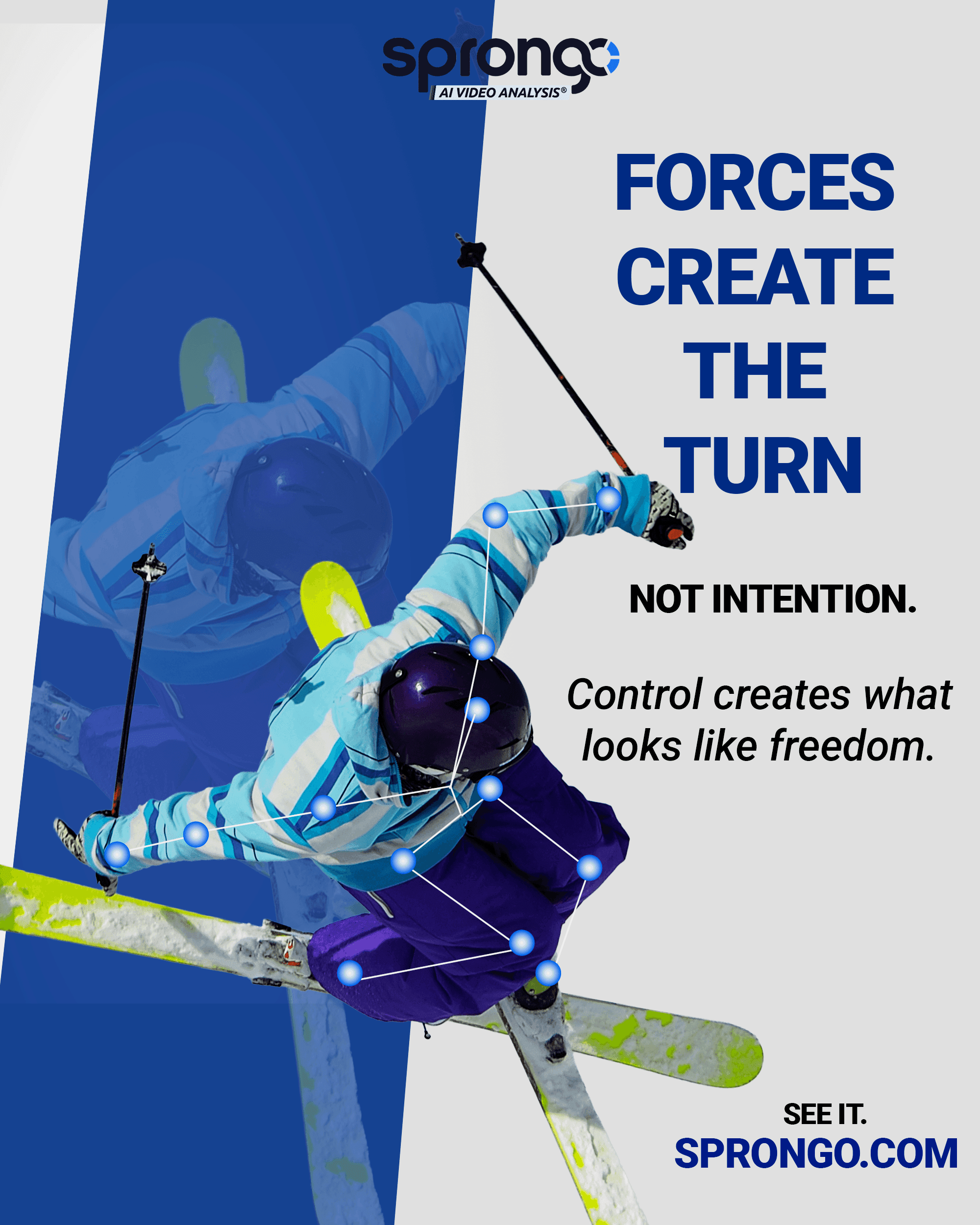
Skiing often looks fluid from the outside, especially when an athlete moves smoothly from one turn into the next. But every controlled turn is the result of precise force management. A skier does not simply decide to turn and let the skis follow. The body must create pressure, manage balance, control edge angle, and respond to changing terrain at speed.
This is what makes alpine skiing such a technical sport. The athlete is constantly adjusting body position while moving downhill, often at high speed and under changing snow conditions. A strong turn depends on how well the skier controls pressure through the skis and uses the body to guide that force. Intention starts the movement, but force and control shape the result.
One of the most important parts of an effective ski turn is edge control. When a skier places the ski on edge, the ski begins to interact with the snow in a way that helps create direction change. The quality of that edge angle affects grip, speed control, and turn shape. Too little edge pressure can cause the ski to slide or lose control. Too much pressure at the wrong moment can interrupt rhythm or make the movement inefficient.
Body position also plays a major role. The skier must stay balanced over the skis while managing forces that pull the body through the turn. Hip position, knee angle, upper-body stability, and ankle flexion all influence how pressure is distributed. If the skier collapses inward, rotates too much, or loses alignment, the turn may become unstable even if the athlete appears to be moving aggressively.
Timing is another key factor. A strong ski turn is not just about applying force; it is about applying force at the right moment. The transition between turns, the build-up of pressure, and the release into the next movement all need to happen in sequence. When timing breaks down, the skier may lose speed control, struggle to maintain rhythm, or compensate with unnecessary upper-body movement.
This is why skiing performance is difficult to evaluate in real time. The movement happens quickly, and the most important technical details are often subtle. A skier may feel balanced while video shows late pressure, poor edge engagement, or a delayed transition. A coach may see the overall line of the turn but need video review to study exactly where the movement pattern changes.
Video analysis is especially useful in skiing because it allows coaches and athletes to slow down complex movement. Frame-by-frame review can reveal how the skier enters the turn, when pressure builds, whether the body stays aligned, and how smoothly the athlete exits into the next turn. These details are hard to fully understand from feel alone.
Visual feedback also helps skiers connect technical instruction with actual movement. A coach may tell an athlete to control the hips, stay forward, increase edge angle, or release pressure earlier. But when the skier can see the exact moment where balance or timing changes, the correction becomes much easier to understand.
For competitive skiers, small details can make a major difference. A slightly late edge change, poor pressure management, or unstable body position can affect speed, line, and consistency. Over multiple turns, these small inefficiencies add up. Video review gives athletes a clearer way to identify those patterns and refine them over time.
Platforms like Sprongo can support this process by helping coaches and athletes analyze skiing movement with greater clarity. Slow-motion playback, visual annotations, and frame-by-frame review make it easier to study turn mechanics and communicate technical corrections. Instead of relying only on what the skier felt during the run, coaches can use video to make movement more visible and measurable.
In skiing, control is what creates freedom. The best turns look effortless because the athlete is managing force with precision. By understanding how edge control, body position, pressure, and timing work together, skiers can build more efficient movement patterns and develop greater confidence on the snow.