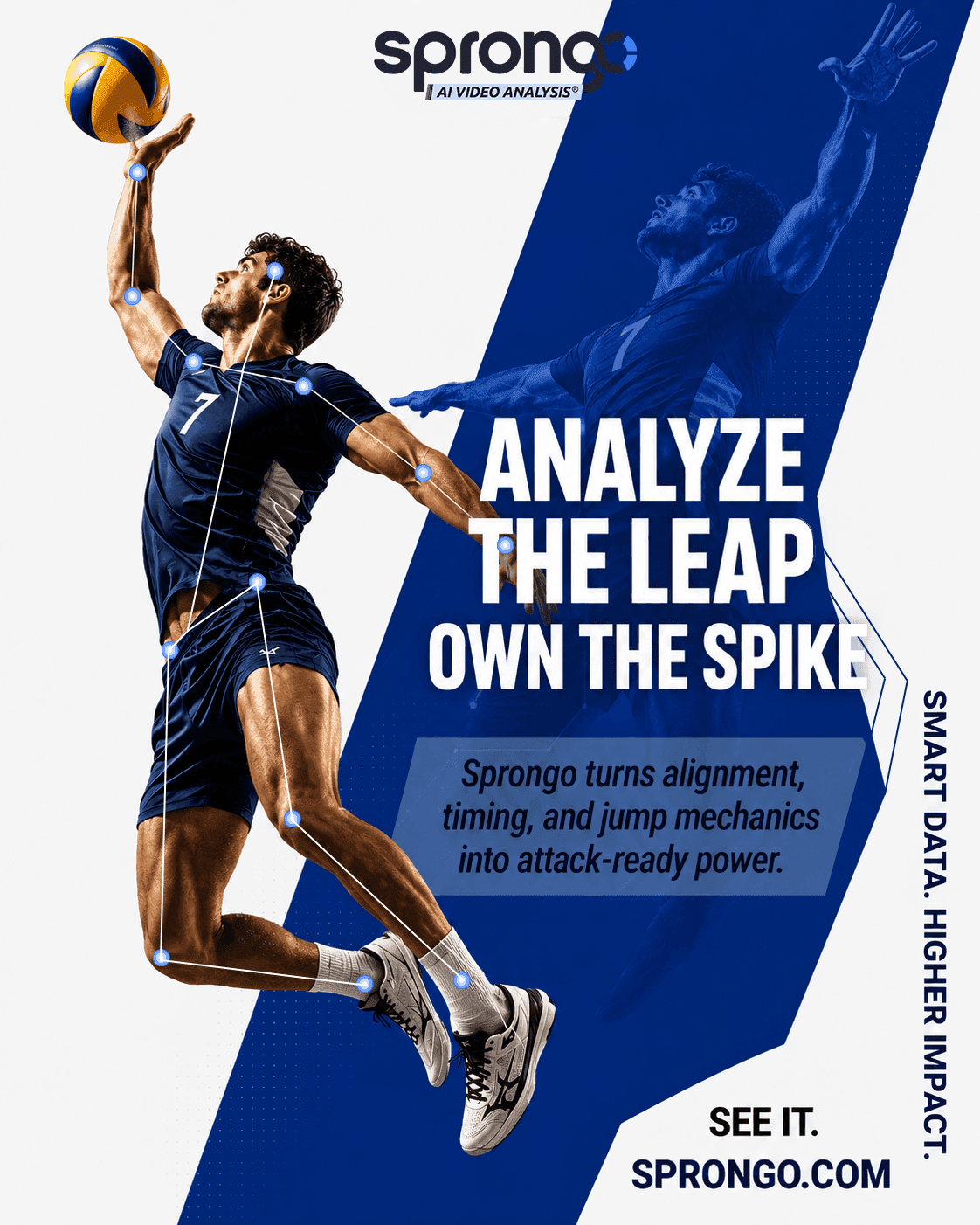
Volleyball is built around explosive, repeated jumping. Whether an athlete is attacking, blocking, serving, or transitioning quickly at the net, jump mechanics play a major role in both performance and movement efficiency. A powerful jump is not only about how high an athlete can get off the floor. It is also about how well they prepare, take off, control their body in the air, and land safely after each action.
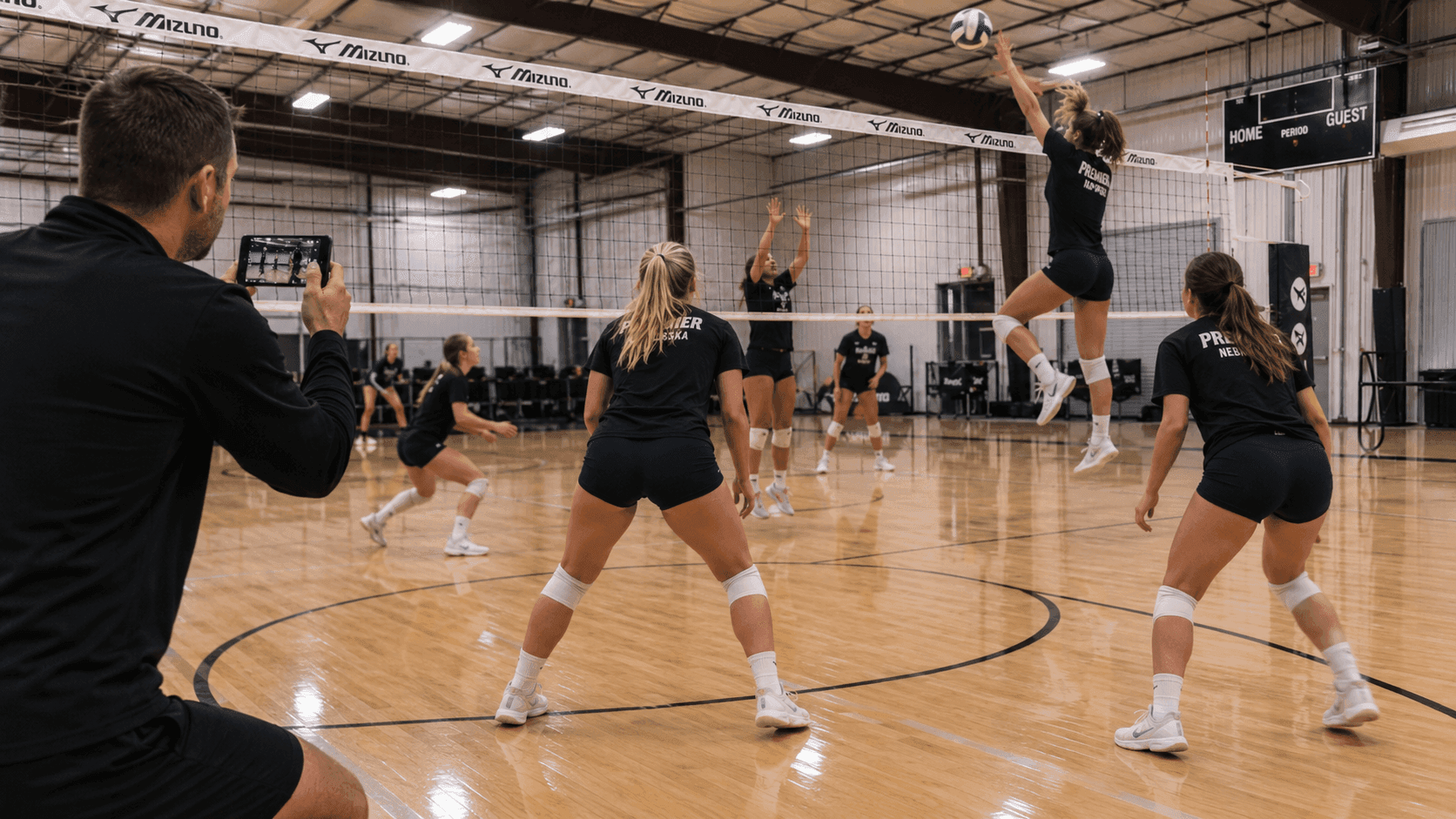
One of the biggest challenges in volleyball coaching is that jump actions happen quickly and often within a crowded team environment. During a rally, an athlete may be reading the setter, adjusting footwork, timing the approach, jumping, contacting the ball, and preparing to land within seconds. From the sideline, it can be difficult for coaches to catch every technical detail in real time.
This is where video review becomes especially useful. By slowing down the movement, coaches can analyze the full jump sequence instead of only judging the final result. A successful attack or block may still include technical inefficiencies that are easy to miss during live play. Video makes it possible to review how the athlete moves before, during, and after the jump.
The approach phase is one of the most important parts of volleyball jump mechanics. An athlete’s final steps influence rhythm, balance, and vertical power. If the approach is too rushed, too narrow, or poorly timed, the athlete may lose control before takeoff. Video review helps coaches see whether the athlete is building momentum efficiently or compensating with unnecessary upper-body movement.
Takeoff mechanics are another key area to analyze. Strong volleyball jumps depend on coordinated movement through the ankles, knees, hips, core, and arms. If an athlete does not load properly before jumping, they may lose power at the net. Slow-motion review can reveal whether the athlete is using arm swing effectively, extending through the hips, and maintaining good alignment through the lower body.
Body control in the air also matters. Attackers and blockers often need to adjust their position while airborne, especially when timing is imperfect or the set is slightly off. Poor body control can affect contact point, hitting angle, blocking position, and landing stability. Reviewing these moments on video gives athletes a clearer understanding of how their body position affects the play.
Landing mechanics are just as important as takeoff. Volleyball athletes repeat jumps many times throughout training and competition, which means poor landing habits can create unnecessary stress over time. Coaches can use video review to identify knee collapse, uneven landings, excessive forward momentum, or poor balance after contact. These details are not always obvious during live drills but become much clearer when reviewed frame by frame.
For athletes, visual feedback can make technical corrections easier to understand. A player may feel that their timing is correct or that they are landing under control, but video may show something different. When athletes can see their own movement, coaching feedback becomes more specific and easier to apply in the next repetition.
Video review also supports team development. Volleyball is not an individual movement sport; jump timing often depends on setter connection, blocking coordination, spacing, and defensive transitions. Reviewing footage helps coaches evaluate both individual mechanics and how each athlete’s movement fits into the larger team structure.
Platforms like Sprongo can help coaches organize this process by making movement review clearer and more collaborative. With slow-motion playback, side-by-side comparison, and visual feedback tools, coaches can break down jump mechanics in a way athletes can actually see and understand. This helps turn fast volleyball actions into teachable moments.
Improving volleyball jump mechanics is not only about jumping higher. It is about moving more efficiently, timing actions better, landing with control, and making technical improvements that support long-term performance. Video review gives coaches and athletes a practical way to see those details and refine movement with greater confidence.