Rhythmic gymnastics is one of the most visually expressive sports, but behind every elegant routine is a high level of technical control. Every turn, extension, balance, leap, and apparatus movement must be coordinated with precision. The athlete is not only performing choreography; she is managing body alignment, rhythm, flexibility, timing, and equipment control at the same time.
Because the sport looks fluid from the outside, it can be easy to underestimate how technical each movement really is. A ribbon pattern, hoop release, balance hold, or body wave may appear smooth in real time, but small details often determine whether the movement is clean, controlled, and consistent. In rhythmic gymnastics, beauty and biomechanics are deeply connected.
One of the most important elements in rhythmic gymnastics is body alignment. Athletes must maintain control through the shoulders, spine, hips, knees, ankles, and arms while moving through complex positions. Even a small loss of alignment can affect balance, extension, apparatus control, or the overall visual quality of a routine. Coaches often need to evaluate not only whether a movement was completed, but how efficiently and cleanly it was performed.
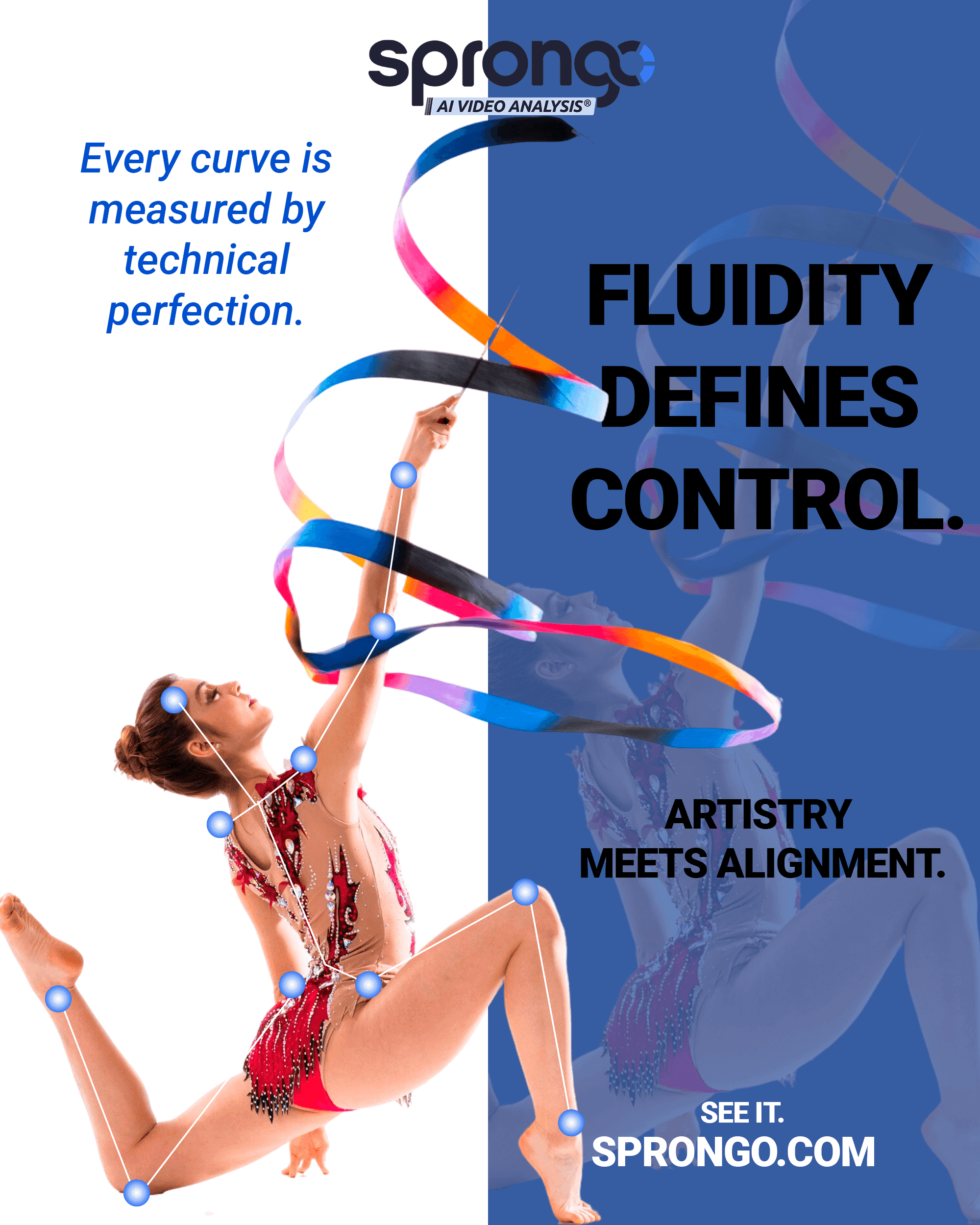
Apparatus handling adds another layer of difficulty. With ribbon, hoop, ball, clubs, or rope, the athlete must coordinate body movement with the path of the apparatus. The ribbon, for example, depends on continuous motion, wrist control, arm positioning, and full-body rhythm. If timing breaks down, the shape of the ribbon can lose clarity, the movement may look interrupted, or the athlete may need to compensate with unnecessary adjustments.
This is where video analysis becomes especially valuable. Rhythmic gymnastics movements happen quickly, and many corrections are difficult to fully process during live performance. By reviewing a routine in slow motion or frame by frame, coaches can identify details that may not be obvious in real time. They can study posture, limb position, extension quality, apparatus path, landing control, and transitions between movements.
Video review also helps athletes understand the difference between how a movement feels and how it actually looks. A gymnast may feel that her arm line is extended, her hips are square, or her ribbon pattern is even, but video may reveal small inconsistencies. Seeing those details visually makes feedback more objective and easier to apply in the next training session.
Another key benefit is consistency. Rhythmic gymnastics depends on repeatable precision. It is not enough to perform a skill well once; the athlete must reproduce the same level of control across routines, training sessions, and competition conditions. Video comparison allows coaches to track whether alignment, timing, and movement quality are improving over time.
For coaches, visual feedback makes communication clearer. Instead of only saying “extend more,” “control the shoulder,” or “keep the ribbon path cleaner,” coaches can show the exact moment where the correction is needed. This helps athletes connect instruction with the visual result, which can make technical adjustments more meaningful.
Platforms like Sprongo can support this process by helping coaches and athletes review movement with greater clarity. Slow-motion playback, frame-by-frame analysis, and visual feedback tools allow rhythmic gymnastics routines to be studied in more detail. This makes it easier to evaluate both body mechanics and performance quality without losing the artistic side of the sport.
Rhythmic gymnastics is built on the balance between artistry and technical precision. The most effective athletes do not simply move beautifully; they control every detail of movement with intention. Video analysis helps make those details visible, giving coaches and gymnasts a clearer way to refine alignment, improve consistency, and develop more controlled, expressive performances.