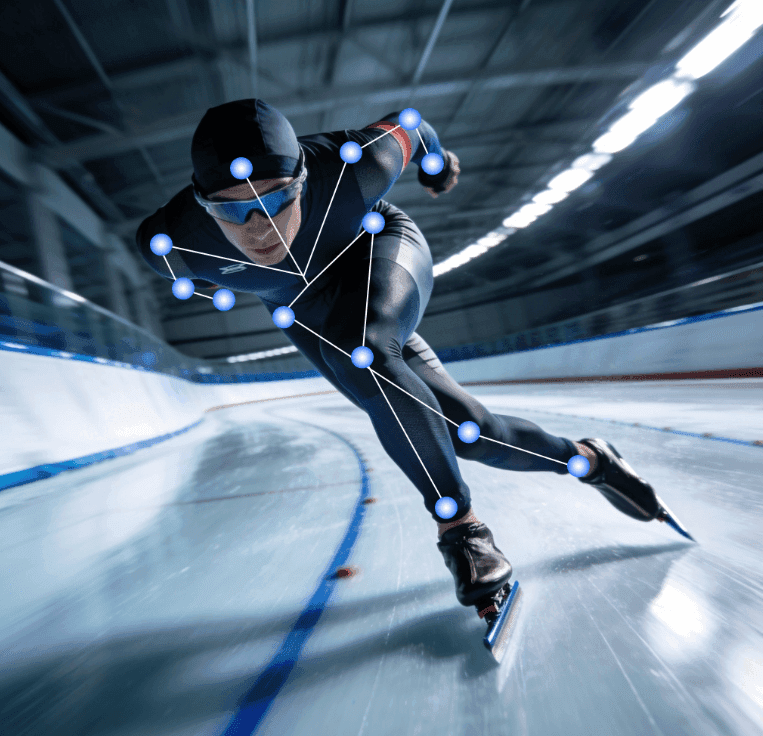
Speed skating leaves no room for hesitation.
From the first push, everything is exposed: balance, rhythm, and the ability to stay controlled while moving faster than the body naturally wants to allow. The ice offers no forgiveness. One misplaced edge, one imperfect line, and momentum disappears instantly.
Unlike sports built around reaction, speed skating is built around repetition. Athletes train their bodies to hold the same position lap after lap, even as fatigue sets in and precision becomes harder to maintain. The posture looks simple from the outside, but sustaining it at race speed is where the real challenge begins.
The track itself becomes an opponent. Corners demand commitment, not caution. Skaters lean deep, trusting their edges while centrifugal force pulls relentlessly outward. Straightaways aren’t moments of rest; they’re opportunities to rebuild speed and reset rhythm before the next turn.
What separates elite speed skaters is efficiency. The strongest performances don’t look frantic or aggressive. They look controlled, almost restrained. Power is released gradually, measured carefully so that nothing is wasted before the final lap.
Speed skating is also unforgiving mentally. Races are often decided by hundredths of a second, leaving no margin for error. There’s no opponent to respond to in real time — only a clock and the awareness that every decision has already been made before the start line.
This is why speed skating remains one of the purest tests in winter sports. It strips competition down to movement, timing, and trust in preparation.
The Skaters Setting the Pace
As the Winter Games approach this February, attention turns to the athletes who consistently thrive under these conditions.
From the Netherlands, Femke Kok and Irene Schouten continue a tradition built on technical mastery and race intelligence. Their ability to control pace over varying distances has set the benchmark in modern speed skating.
On the men’s side, Jordan Stolz has emerged as a defining figure, combining raw power with exceptional composure beyond his years. Veterans like Kjeld Nuis bring experience and tactical awareness, often delivering their strongest performances when margins are at their tightest.
These skaters don’t chase speed blindly. They shape it, protect it, and release it only when the race demands.
When the ice is ready this February, those who can hold their line longest will define the competition.