A powerful golf swing is not only about strength. Some of the most consistent golfers generate impressive club speed and control through efficient movement mechanics rather than excessive force. This is why biomechanics has become such an important part of modern golf training. Understanding how the body moves during the swing allows athletes and coaches to improve consistency, efficiency, and overall performance.
The golf swing is one of the most technically demanding movement patterns in sports. It requires coordination between the lower body, core, upper body, and club path, all happening within a very short amount of time. Small changes in posture, rotation, balance, or sequencing can significantly affect ball contact and shot accuracy.
One of the key elements of an efficient golf swing is rotational sequencing. Energy is generated from the ground up, beginning with the lower body before transferring through the hips, torso, shoulders, arms, and finally the club. When this sequence is properly timed, golfers can create more club speed without relying entirely on upper-body effort.
Hip rotation also plays a major role in swing efficiency. Limited hip mobility or poor rotational timing often leads to compensation patterns that reduce consistency and place unnecessary stress on the lower back and shoulders. Efficient golfers are typically able to rotate through the swing while maintaining posture and balance throughout the movement.
Posture is another critical factor that directly affects swing mechanics. Poor setup positions can influence swing path, rotation, and weight transfer before the movement even begins. Maintaining a stable spine angle while rotating allows golfers to create cleaner contact and more repeatable motion patterns.
Balance and weight transfer are equally important. During the backswing and downswing, golfers must shift pressure efficiently without losing body control. Improper weight transfer often leads to inconsistent contact, reduced power, and timing issues. Many amateur golfers struggle in this area because movement errors can be difficult to feel during live swings.
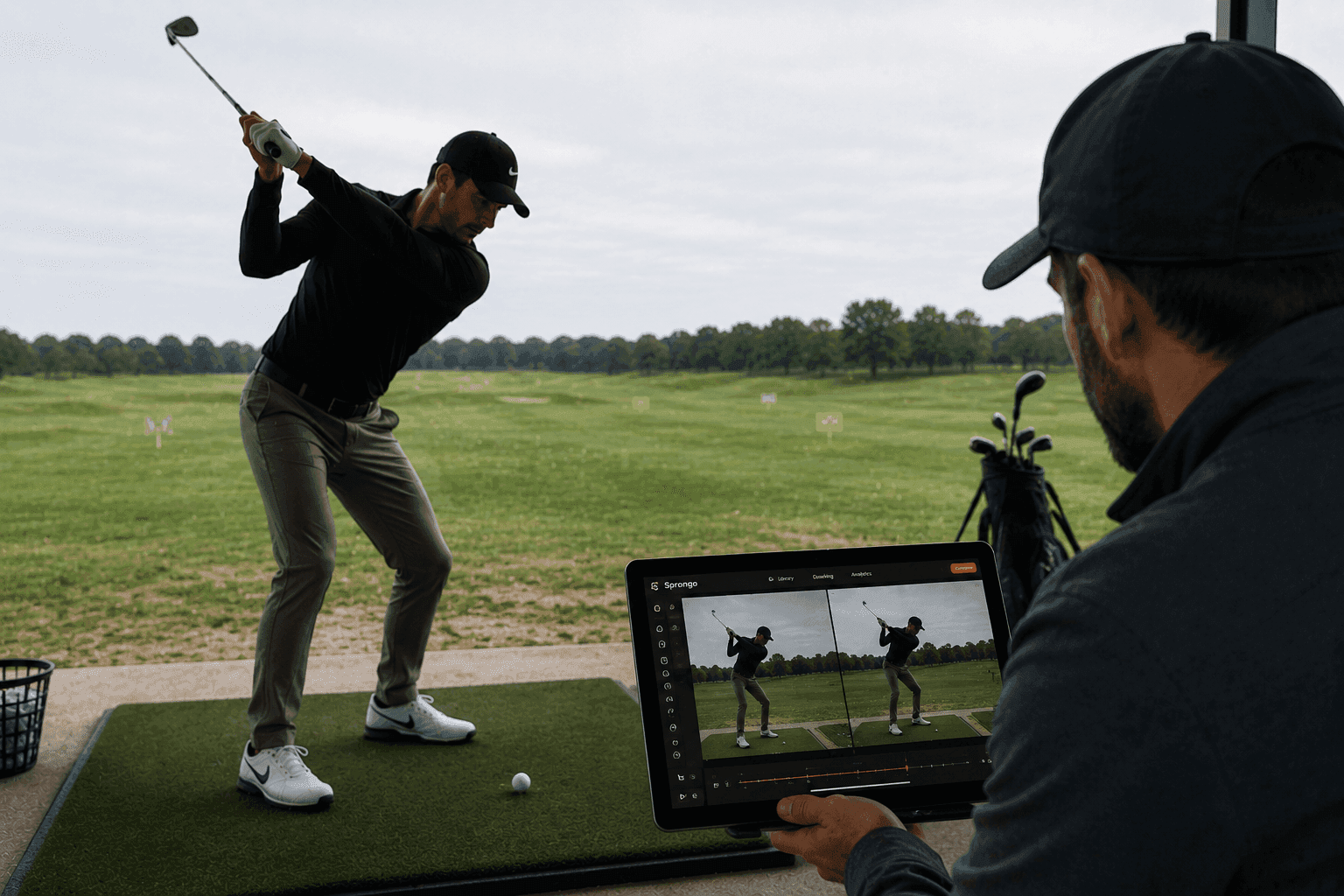
This is one reason why video analysis has become increasingly valuable in golf coaching. Since the swing happens so quickly, athletes may not fully recognize issues related to posture, sequencing, or club path in real time. Slow-motion review allows coaches and athletes to break down movement patterns frame by frame and identify technical inefficiencies more clearly.
Visual feedback also helps golfers connect coaching instruction with actual movement. A player may believe their hips are rotating correctly or their posture remains stable, but video often reveals small breakdowns that affect performance. Reviewing swings visually creates better body awareness and allows for more accurate adjustments during training.
Modern golf coaching continues to move toward data-driven movement analysis, especially at higher performance levels. Coaches now combine biomechanics, video review, and visual feedback to improve movement efficiency while reducing unnecessary mechanical stress. This creates a more measurable and structured approach to technical development.
Platforms like Sprongo help simplify this process by giving coaches and athletes access to tools such as slow-motion playback, movement review, and frame-by-frame analysis. Instead of relying only on feel during practice sessions, golfers can study movement patterns visually and make more informed adjustments over time.
As golf performance becomes increasingly detail-oriented, understanding swing biomechanics is no longer limited to elite players. Athletes at every level can benefit from clearer movement analysis, better visual feedback, and a deeper understanding of how efficient mechanics contribute to consistency and long-term improvement.