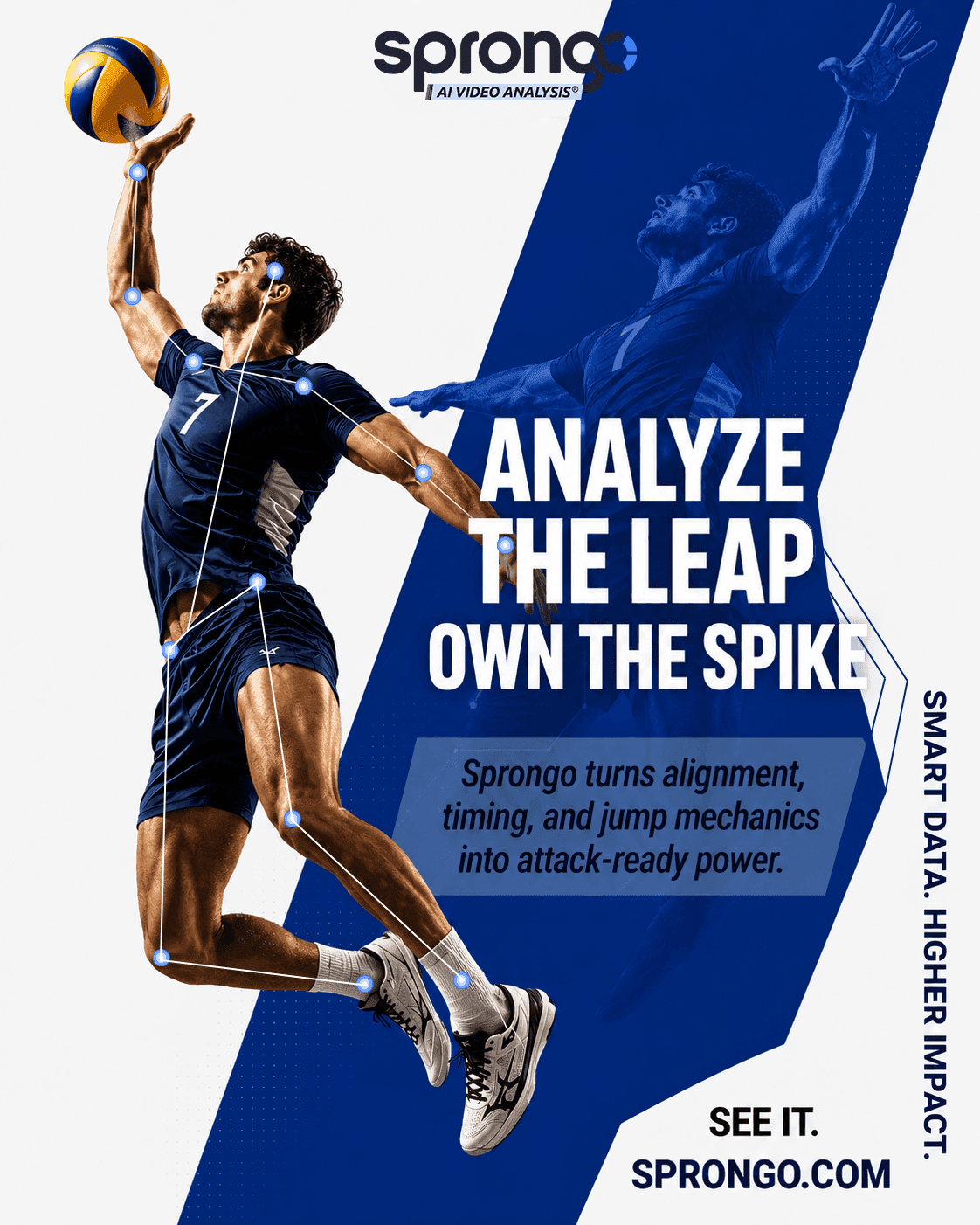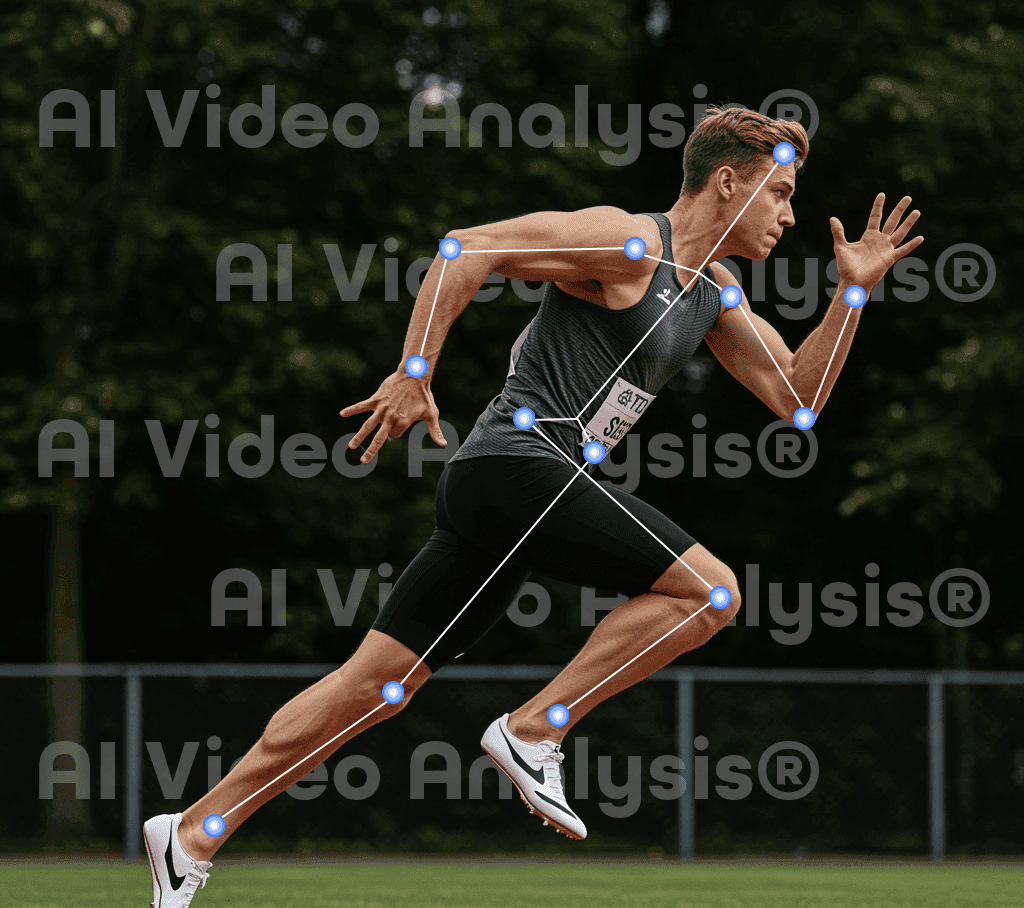
Video has long been used in sport and performance environments as a review tool. Coaches and athletes record sessions, replay movements, and rely on visual assessment to identify strengths or weaknesses. However, watching movement and measuring movement are not the same process. AI Video Analysis® represents a structural shift in how movement is documented. It transforms standard video into quantifiable, objective data using computer vision and biomechanical modeling.
At its core, AI Video Analysis® is not a coaching system, a feedback engine, or a predictive model. It is measurement infrastructure. Its purpose is to convert visual information into structured data that can be analyzed, compared, and archived over time.
From Visual Review to Quantifiable Data
Traditional video review is qualitative. An expert observes the footage and applies professional judgment. While expertise is essential, qualitative evaluation is inherently influenced by perception, expectation, and memory. Two sessions recorded weeks apart may look “similar,” yet small biomechanical differences can be difficult to detect consistently with the human eye.
AI Video Analysis® introduces a quantitative layer. Instead of asking whether something “looks better,” the system extracts measurable variables from each frame of video. These variables create a structured representation of movement that can be tracked and compared objectively.
The Technical Foundation: Computer Vision and Landmark Detection
The technology behind AI Video Analysis® relies on computer vision algorithms trained to detect and track human body landmarks. When a video is uploaded, it is decomposed frame by frame. Within each frame, the system identifies key anatomical reference points such as joints and major body segments. These landmarks are then tracked across time to build motion trajectories.
From these trajectories, the system calculates biomechanical metrics including joint angles, angular velocities, acceleration patterns, and spatial relationships between body segments. Because this process is markerless, no specialized suits or hardware are required. Standard video footage becomes the input for structured measurement.
The output is not simply a collection of raw numbers. The system organizes measurements into a consistent, repeatable format so that different sessions can be compared reliably. This structured approach allows movement to be documented with clarity and precision.
Objectivity as a Design Principle
One of the defining characteristics of AI Video Analysis® is the separation between measurement and interpretation. The platform reports what it detects in the video data. It does not prescribe exercises, suggest corrections, or make performance decisions. Interpretation remains the responsibility of the athlete, coach, or clinician.
This boundary is intentional. By isolating the measurement layer from subjective interpretation, the system maintains objectivity. The data becomes a neutral reference point that supports informed discussion rather than replacing human expertise.
Structured Documentation and Longitudinal Tracking
When movement is converted into structured data, it becomes comparable across time. Each analysis can be archived, versioned, and revisited. Instead of relying on memory or impression, users can examine measurable differences between sessions.
Over weeks, months, or seasons, this creates a documented history of movement patterns. Subtle changes in alignment, symmetry, or timing can be identified numerically rather than visually estimated. This transforms video from a simple recording tool into a long-term measurement asset.
Why Infrastructure Matters
It is important to understand AI Video Analysis® not as a feature, but as infrastructure. Features provide isolated functionality. Infrastructure changes the underlying framework. By converting video into structured data, the platform establishes a foundation for repeatability, comparability, and scalability.
In performance environments where decisions depend on consistency and clarity, objective measurement reduces ambiguity. It enables more precise conversations and more reliable documentation.
Final Perspective
AI Video Analysis® does not replace expertise. It strengthens it by providing objective measurement. By translating video into quantifiable biomechanical data, it shifts movement evaluation from perception to structure. In doing so, it creates a foundation for clearer analysis, long-term documentation, and data-informed performance discussions.