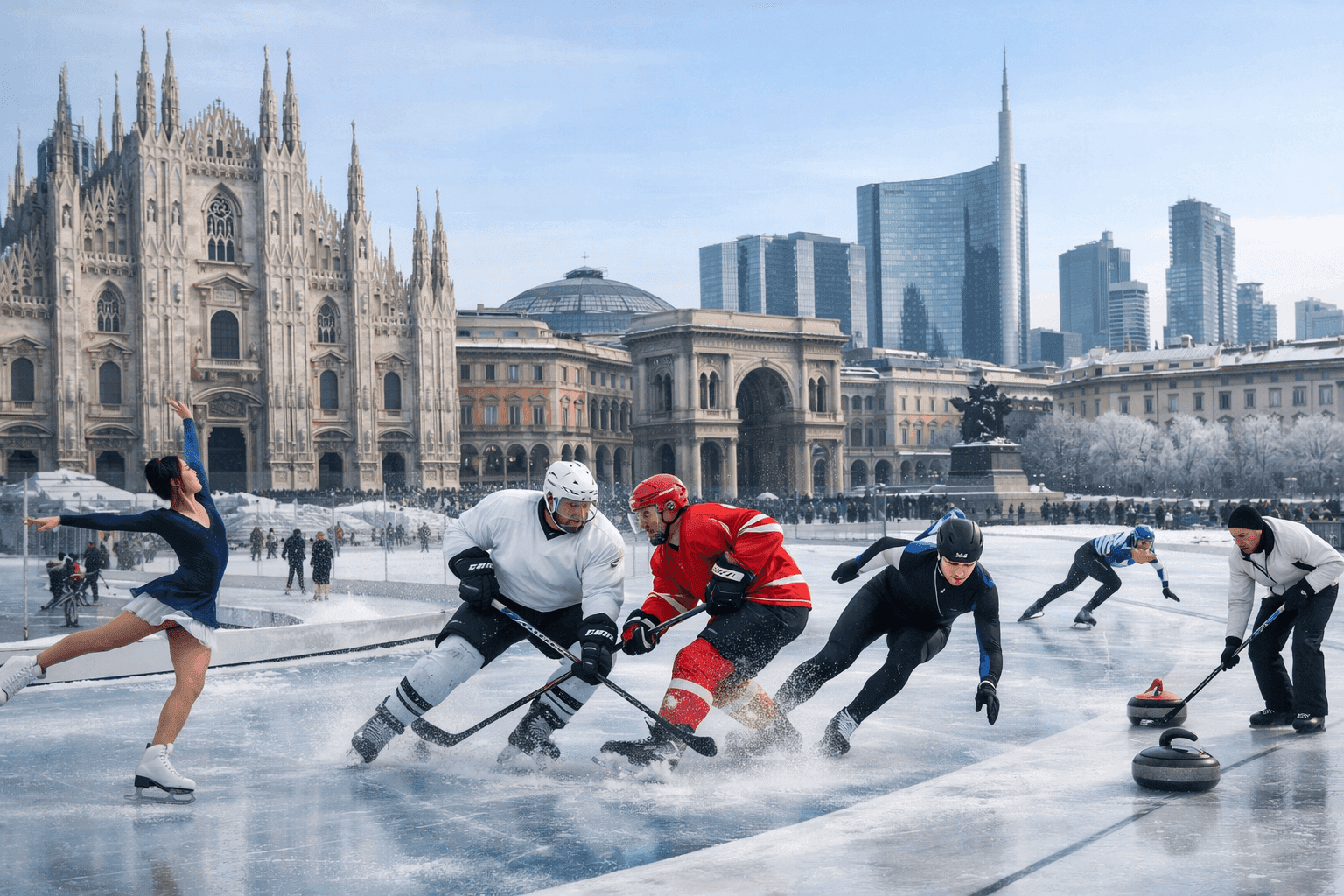
All Eyes on Milano–Cortina 2026: Winter Sports, Powerhouse Nations, and Olympic Stars
The countdown to the Milano–Cortina 2026 Winter Olympics is officially underway. With less than a year to go, preparations across northern Italy are intensifying as venues near completion, qualification races unfold, and national teams begin to reveal their Olympic ambitions.
Unlike previous editions centered around a single host city, Milano–Cortina 2026 will span multiple regions, blending the urban energy of Milan with the alpine heritage of Cortina d’Ampezzo and surrounding mountain venues. This unique geographic layout is designed to showcase both modern infrastructure and the traditional environments where winter sports performance is truly defined.
As the Games approach, attention is increasingly focused on three central questions: which sports will shape the competition, which nations are positioned to lead the medal race, and which athletes are likely to define Milano–Cortina 2026.
The Winter Sports That Will Define Milano–Cortina 2026
The Milano–Cortina program features the full spectrum of Olympic winter sports, ranging from high-speed alpine events to precision-driven ice disciplines.
Alpine Skiing remains one of the headline attractions of the Winter Olympics. Downhill, slalom, and giant slalom events are expected to draw massive global audiences, with races often decided by fractions of a second. Traditionally dominated by European powerhouses, alpine skiing continues to deliver some of the most dramatic moments of each Games.
Cross-Country Skiing and Biathlon will once again test endurance, pacing, and mental discipline. These events are closely followed in Northern Europe, where long-standing rivalries often shape medal expectations and where consistency under fatigue is often the difference between podium positions.
Figure Skating remains one of the most widely watched Olympic sports, combining athletic difficulty with artistic interpretation. Individual performances frequently transcend competition results, turning standout skaters into global stars overnight.
Ice Hockey, across both the men’s and women’s tournaments, continues to be one of the most competitive team events of the Winter Games. Deep rosters, tactical discipline, and high-pressure execution define success across multiple rounds of play.
Meanwhile, freestyle skiing and snowboarding are expected to play a major role in attracting younger audiences. These disciplines highlight creativity, progression, and technical innovation, reinforcing the evolving identity of the Winter Olympics.
Which Countries Are Expected to Lead the Medal Race?
Historically, the Winter Olympics have been dominated by a relatively small group of nations with deeply established winter sports systems.
Norway consistently leads medal tables through its depth in cross-country skiing and biathlon.
Germany remains a dominant force in sliding sports and speed skating.
Canada and the United States are expected to compete strongly in ice hockey, freestyle skiing, and snowboard events.
Switzerland and Austria continue to set the standard in alpine skiing, often fielding medal contenders across multiple disciplines.
As host nation, Italy is also expected to play a prominent role, supported by home conditions and strong performances in selected events.
Beyond these traditional powers, several nations with developing winter sports programs are expected to make notable appearances, reflecting the continued global expansion of Olympic winter competition.
Athletes and Stars to Watch as the Games Approach
While final Olympic rosters will only be confirmed closer to the Games, several established athletes are already emerging as potential headline figures. In disciplines such as alpine skiing and figure skating, returning Olympic medalists and reigning world champions are expected to attract significant attention.
Milano–Cortina 2026 is also likely to introduce a new generation of athletes, using the Olympic stage to announce themselves on a global level. Historically, these breakthrough performances often become defining moments of each Winter Olympics, shaping careers and national narratives alike.
What Comes Next
As qualification events conclude and official schedules are released, the focus will shift from preparation to performance. Each competition day will bring new rivalries, technical challenges, and moments that define the Games.
This article serves as a comprehensive overview ahead of Milano–Cortina 2026. In the coming weeks, we will take a closer look at each winter sport, explore key athletes and performance factors, and highlight the moments most likely to shape the story of the upcoming Winter Olympics.