Softball is not baseball on a smaller field
College softball already borrows a lot of video habits from baseball, and some of that is useful. The swing still has a load, a stride and a rotation. The difference is large enough that baseball clips, baseball camera marks and baseball cues will mislead you.
The pitch comes from a shorter distance — 43 feet in NCAA play — from a flat rubber, with an underhand windmill delivery. Rise, drop, curve, change and screwball movement are part of the craft, and they arrive quicker, in time, than an overhand pitch from 60 feet 6 inches. Hitting includes power hitting and, in many lineups, slap hitting. If you review softball with a baseball camera, you will miss the circle, the release and the timing of a slap.
This guide is for filming and reviewing hitting, slap hitting and pitching in a college or college-bound program. It is not a recap of our baseball swing and pitching guide. Use that for baseball. Use this for softball. For a recruiting tape, pair these tighter clips with the broader advice in our college recruiting video guide.
Safety and camera placement
A missed pitch, a fouled slap and a dropped ball all travel quickly in a tight space. Set the camera still, off the court of play, and well clear of the batter, the catcher, the circle and any warm-up throwing.
- Use a tripod or a fence. A handheld phone along the baseline is a poor review tool.
- Do not put a camera on the ground in the path of a wild pitch or a bat.
- Do not film from a catcher's crouch or from directly in front of a hitter.
- If you film bullpens, keep people out of the line of the pitch and the line of a missed catch.
A still, slightly distant camera is safer and more useful than a close one.
Pitching: how to film the windmill
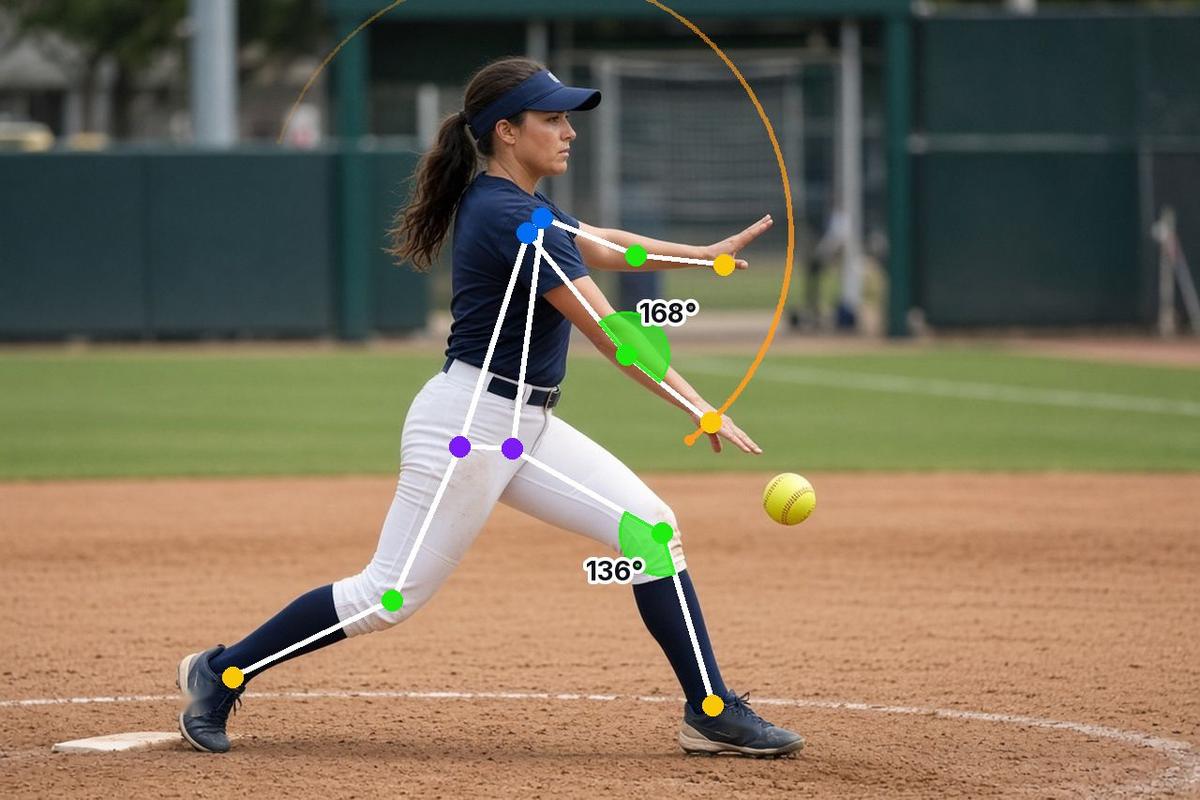
The main mechanics view is side-on to the pitching lane, far enough back to show the full arm circle, the stride, the release and the finish. If you cut off the arm at the top of the circle, you cannot review the delivery.
A second view, at about 45 degrees and still well out of the path of the pitch, can show posture, stride direction and whether the shoulders stay aligned toward the plate. A view from behind the pitcher, used carefully, can show direction to the target and where the ball is leaving relative to the body, but it flattens the circle. A view from behind the catcher is useful for location, not for mechanics.
Film sets of the same pitch, not a mixed bullpen in which every throw is a different idea. Say the pitcher's name, the pitch type and the set at the start of the clip. In Sprongo, a name spoken in the first 5 seconds is tagged automatically.
Pitching: what to look for
Watch a pitch once at full speed, then slow down the start of the circle, the stride and the release.
Check:
- Start and posture: does the pitcher begin in a repeatable stance, and does the torso stay controlled as the arm moves?
- The circle: is it a consistent path, or does the arm swing out, stall or change shape from pitch to pitch?
- Stride: direction toward the plate, and whether the stride length is stable on the same pitch type.
- Release: is the ball leaving at a consistent point relative to the back hip and the stride, or is the release drifting earlier and later?
- Finish: does the pitcher finish in a balanced position she can field from, or is she falling off and watching the ball?
- Repeatability: on a set of five riseballs or five drops, do the circle and the release look like the same pitch?
Coaches disagree about some of the finer cues in windmill pitching, and this post is not a single mechanical school. The point of the video is to see whether the delivery actually repeats, and whether it changes under a longer set. Do not use phone footage to invent a spin rate or a velocity number. If you want speed, use a radar. For movement, the catcher's report and the location in the zone matter as much as the picture.
Compare a fresh first pitch of a bullpen with a pitch late in the same set, then compare this week with a previous week. In Sprongo, pick Compare, sync the two pitches on the same moment (the top of the circle, or the release) and view them side by side or overlaid. Path Track can trace a wrist, an elbow or a hip. SIVA, Sprongo's AI video assistant, can answer a focused question such as "Does my stride stay toward the plate on this pitch?" It reads 2D video, so camera position matters, and it does not replace a pitching coach.
Hitting: how to film
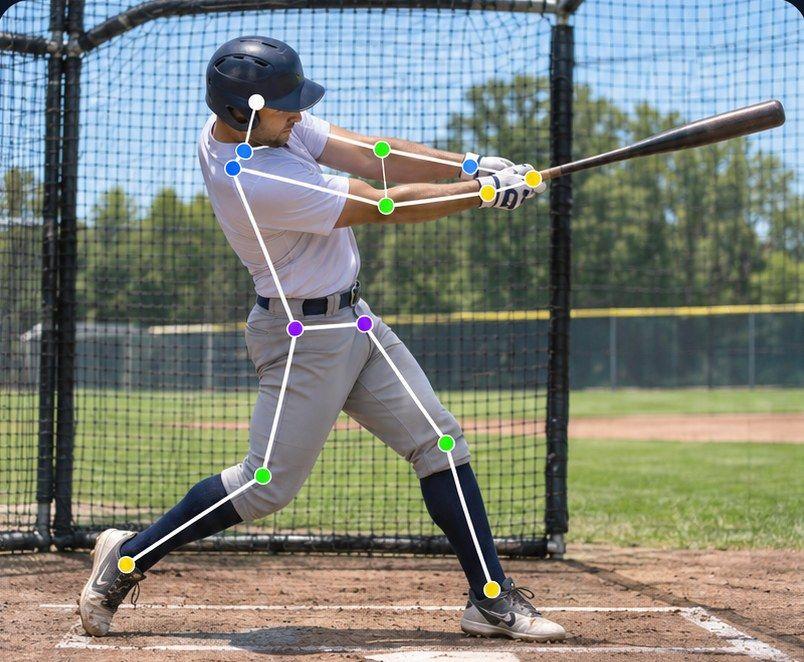
Set a still camera on the open side of the hitter — the side their chest faces — at about hip to chest height. The frame should include the feet, the hips, the bat and the contact point, plus enough of the incoming pitch to see timing. A camera directly behind the hitter hides the contact. A camera too close on the open side will lose the bat.
If you only have one camera, keep it on the open side for a block of swings, then move it for the next block if you also want a front or slightly offset view. Changing angle every swing makes comparison unfair.
Film groups of swings against the same kind of feed when you can: front toss, machine, or live, but do not mix them in one comparison. A swing against a rise and a swing against a drop are not the same task.
Hitting: what to look for
At full speed, watch timing and whether the swing is on time for that pitch. Then pause at load, foot down, contact and extension.
- Stance and load: is the load repeatable, or does it change size from swing to swing?
- Stride and direction: does the stride stay controlled, and is the front side firm at contact?
- Rotation: do the hips and the torso turn through the ball, or does the barrel drag as the body stalls?
- Contact: is the contact point consistent for that pitch location, and does the barrel stay on path or roll over early?
- The pitch: was this a good swing on a pitch the hitter should swing at, or a fair swing at a ball they should have taken?
College hitting is as much about pitch selection as it is about the pattern. The clip can show both, but only if you can see the incoming ball.
Slap hitting: treat it as its own skill
Slap hitting is a core part of many college lineups, especially with left-handed slappers, and it should not be reviewed as a short version of a power swing.
Film from the open side, wide enough to see the start of the run, the contact and the first step out of the box. On video, check:
- Timing of the movement out of the box relative to the pitch.
- Body control at contact: is the slapper still in position to use the intended bat angle, or already running through the ball with no control?
- Bat path and contact point for the type of slap they meant to hit (soft slap, power slap, or bunt).
- The first steps after contact, and whether the slapper is actually beating the play or running into a poor angle.
Compare slaps with slaps, not a slap with a full swing. The timing and the contact point will not match, and the player will get a cue that does not belong to the skill.
A review routine that fits a college week
- In a bullpen or a hitting group, film one action: a single pitch type, a set of live swings, or a slap round.
- Review the same day. Pick one cue.
- Compare two pitches or two swings lined up on the same moment.
- Once a block, compare a current clip with one from earlier in the season, from the same camera mark.
Draw on the frame or leave a voice note, and share the exact moment with the player or another coach. Keep pitching and hitting in playlists by player, not in a staff message thread. Sprongo works on iPhone, Android, tablet and the web, so coaches can review between practice and meetings.
Common mistakes
- Using a baseball side-toss camera mark and never seeing the full arm circle.
- Reviewing a riseball and a drop as if they were the same pitch.
- Coaching slappers with only full-swing clips.
- Filming from a moving phone along the baseline.
- Comparing swings taken from two different angles.
- Trying to read spin or speed off a phone clip and treating that as data.
Frequently asked questions
Can we use our existing baseball camera marks? Some hitting marks will transfer if the open-side view still shows the feet, the bat and the ball. Pitching marks usually will not, because the windmill circle and the shorter distance need a different frame. Set softball marks on purpose.
How many pitches should we film in a bullpen? A set of the same pitch is more useful than the whole bullpen. Five to ten of one type, from the same camera, is enough for a review.
Should slap hitters also film full swings? If they also swing away, yes, but keep those clips in a separate comparison. Do not judge a slap against a full-swing model.
Can video tell us why a riseball is not rising? It can show whether the delivery and the release are repeating. It cannot, on its own, measure spin. Use the footage together with what the catcher and the hitter are seeing.
Is this useful for high school players who want to play in college? Yes. The camera setup and the checkpoints are the same. Starting before college makes the first preseason review much easier.
Film one skill, from one mark, this week
Pick a single pitch type or a single hitting skill, including slap if that is part of the player's job. Set a still camera, review a short set, and save the clip as the reference for the next block. The programs that get value from video film the same skill, from the same spot, more than once.
Get Sprongo · App Store · Google Play
Coaching a program? See team plans.