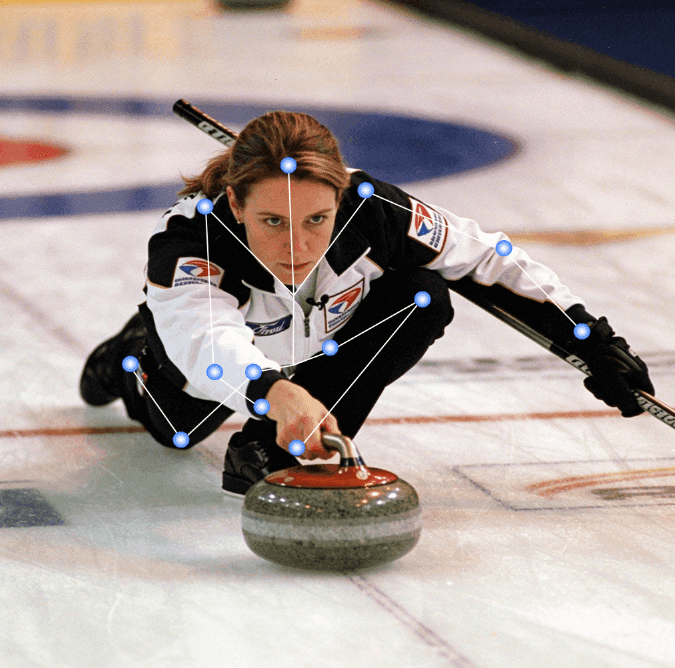
Curling never tries to impress at first glance. And that’s exactly where its strength lies.
On a sheet of ice that looks almost empty, teams spend entire matches shaping outcomes that won’t fully reveal themselves until the final stones are thrown. There’s no rush, no wasted movement. Every action is deliberate, every decision layered with intent.
Curling is often misunderstood because it doesn’t perform for attention. It doesn’t rely on speed, contact, or spectacle. Instead, it builds tension slowly, through positioning, patience, and long-term planning. What looks like a simple delivery is usually the result of multiple conversations, silent calculations, and a clear understanding of what might happen three or four ends later.
Lowering the body toward the ice isn’t just about balance. It’s about commitment. Once a stone is released, the team’s responsibility shifts instantly. Sweepers read the surface in real time, adjusting speed and direction by fractions that most viewers never notice. A few extra seconds of sweeping can open a path. A moment too late can erase an entire plan.
Communication in curling never stops. Not because the sport is chaotic, but because the margins are unforgiving. Teams talk through every scenario: protect, remove, freeze, wait. Often the smartest move is restraint — placing a stone not to score, but to control what becomes possible later.
At the highest level, curling feels less like a match and more like a negotiation. Strong nations such as Canada, Sweden, Great Britain, and Switzerland don’t chase early advantages. They apply pressure quietly, forcing opponents into uncomfortable decisions, waiting for the smallest opening to appear.
What makes curling especially compelling is how clearly momentum can shift without noise. One stone changes the geometry of the ice, and suddenly the entire end feels different. Control doesn’t come from aggression; it comes from understanding when not to act.
Curling rewards attention. The longer you stay with it, the more the structure reveals itself. Patterns emerge. Choices make sense. And once you see how much is happening beneath the surface, the sport becomes difficult to ignore.
The Names That Shape the Ice
As the Winter Games approach this February, attention naturally turns to the athletes who have defined curling at the highest level — and those expected to do so again.
From Canada, Brad Gushue remains one of the sport’s most respected figures, known for his calm decision-making and ability to control matches late. Sweden’s Niklas Edin has set the modern standard for consistency, leading teams that rarely give opponents room to breathe. On the women’s side, Silvana Tirinzoni and her Swiss team have redefined precision, often winning matches without ever looking rushed.
These athletes don’t dominate through force. They dominate through timing, discipline, and an understanding of the ice that only comes from years at the top. When the Games begin, their presence won’t be loud but it will be felt in every end.
Curling doesn’t announce its stars with spectacle. It lets them reveal themselves through decisions that hold up under pressure.
And when the ice is set this February, those decisions will matter more than ever.