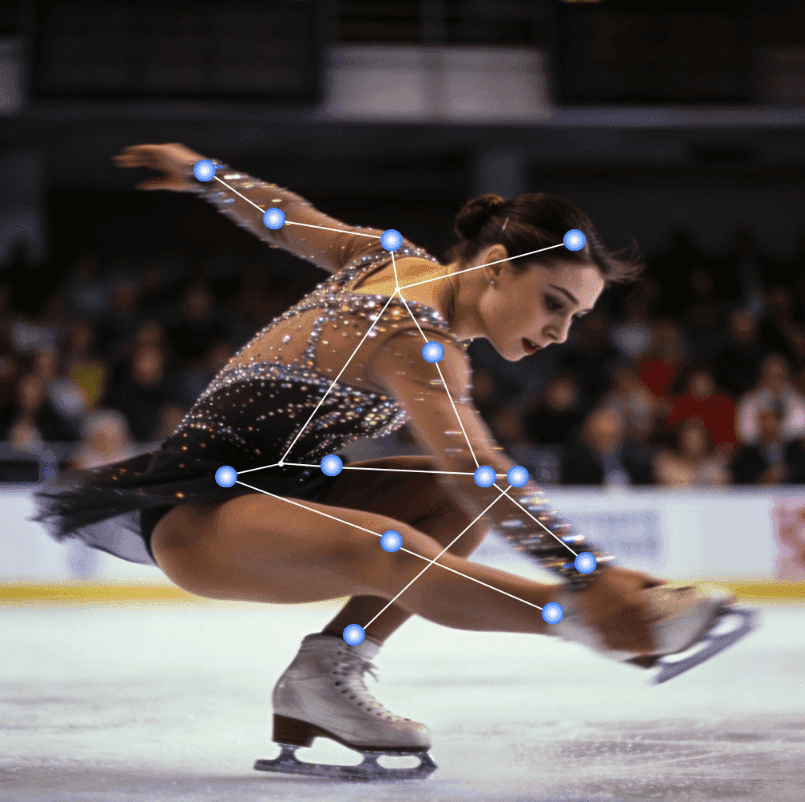
Figure skating never hides what’s at stake.
From the moment a skater steps onto the ice, everything becomes visible — balance, control, hesitation, confidence. There’s no place to recover quietly, no time to reset off-camera. Every movement is exposed, every decision measured in real time.
What separates figure skating from other winter sports is how closely performance and pressure coexist. Speed matters. Technique matters. But so does composure. A jump landed cleanly under training conditions means nothing if it can’t be repeated under lights, noise, and expectation.
The ice itself becomes part of the equation. Slight changes in surface, timing, or rhythm can alter an entire program. Skaters don’t simply execute routines; they negotiate constantly with momentum, gravity, and nerves. One small adjustment mid-spin can decide whether a program holds together or unravels.
Figure skating rewards commitment. Half-decisions don’t survive. Jumps are either fully taken or not at all. Spins demand precision through fatigue. Footwork requires clarity even when legs start to feel heavy. The sport doesn’t forgive uncertainty — it amplifies it.
At the highest level, figure skating becomes an exercise in restraint. Great performances don’t look rushed or forced. They feel inevitable. The strongest skaters control pace as much as they control technique, allowing difficulty to emerge naturally rather than announcing it.
That’s why figure skating remains one of the most watched winter disciplines. Not because it’s decorative, but because it’s honest. The ice reflects exactly what an athlete brings into the moment nothing more, nothing less.
The Skaters Who Define the Moment
As the Winter Games approach this February, attention naturally turns to the athletes who consistently deliver under pressure.
On the women’s side, Kaori Sakamoto has set the standard with her stability and power, often making complex programs look deceptively simple. Isabeau Levito represents a new generation technically refined, composed, and increasingly comfortable on the biggest stages.
In men’s skating, Ilia Malinin continues to push technical boundaries, redefining what’s considered possible in competition, while skaters like Shoma Uno bring experience, control, and program maturity that only years at the top can produce.
These athletes don’t just perform routines. They shape expectations. When they skate, the margin for error shrinks — not because judges demand more, but because the level itself rises.
Figure skating doesn’t wait for mistakes. It waits for commitment. And when the ice is set this February, those who thrive under that pressure will define the story of the competition.