Why flexibility should be filmed, not only felt
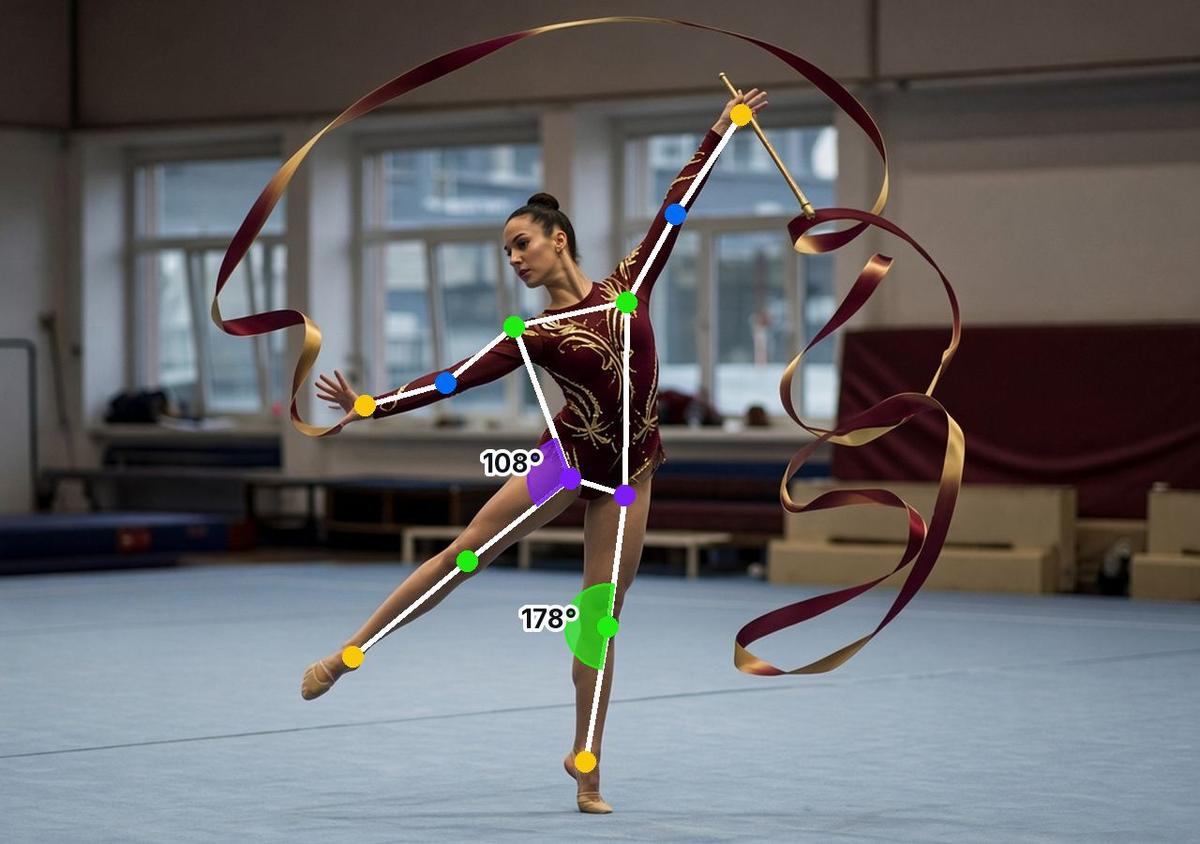
Flexibility in rhythmic gymnastics is not a side quality. It is what makes a split look like a split, what lets a ring close, and what lets a back-bend balance reach a defined shape instead of a suggested one. Gymnasts and parents often judge it by how a stretch feels. Feel is a poor measuring stick. A gymnast can feel tighter after a travel day and think she has lost range, or feel loose after a warm-up and think a shape is ready for the routine.
Video is a calmer record. If you film the same positions, from the same spot, you can see whether a split is actually opening, whether a knee is softening to create the illusion of range, and whether a Difficulty of Body (DB) shape is defined enough to be worth putting in a routine.
This is not a general flexibility article, and it is not a repeat of how to analyze leaps, balances and rotations in a routine. For element-by-element review, use our leaps, balances and rotations guide. This post is about tracking the range and control underneath those elements, and being honest when a shape is not there yet.
What the Code actually asks of the body
Under the FIG Code of Points for 2025–2028, Difficulty of Body includes jumps and leaps, balances and rotations. The eight highest DBs in an exercise are counted, and at least one element from each group must be present. Each DB also has to be performed with a recognized apparatus technical element.
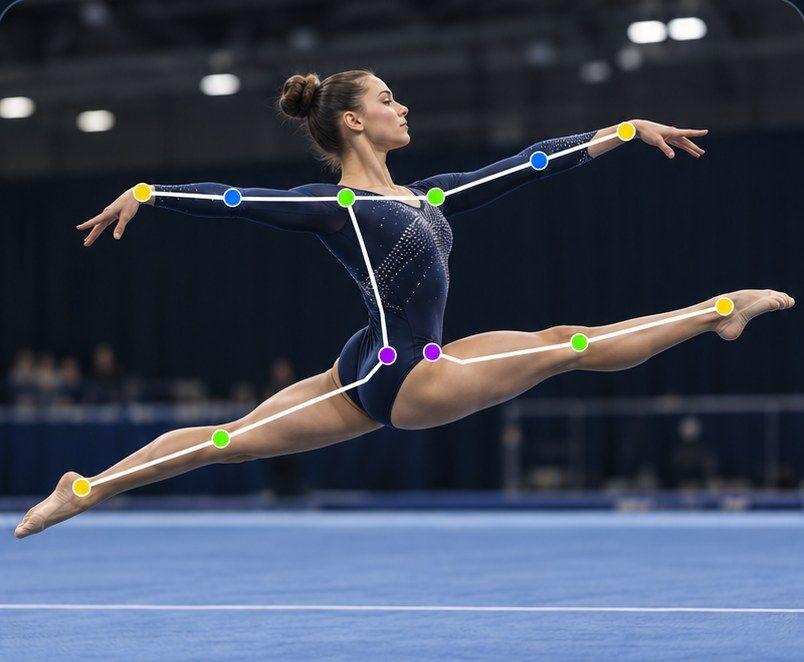
Validity depends on a fixed, defined shape. The Code's own examples include a 180-degree split, a closed ring, and, for difficulties with a back bend of the trunk, contact with the leg. If the split is short of 180, the knee is bent to fake amplitude, or the back bend never arrives, the shape may not be recognized, and execution deductions can still apply.
You do not need to become a judge to use that idea in training. You do need a consistent way to see whether the shape is improving. Always check the current Code, or your federation's rules, for the exact requirements in this cycle. Video will not award a score. It will show you the shape.
A simple flexibility film set
Pick a short set of positions you already use in training and film them the same way every time. A useful starter set is:
- Right and left split on the floor, square hips, both knees extended.
- Right and left oversplit, if that is part of the gymnast's program, with the same block or mat height each time.
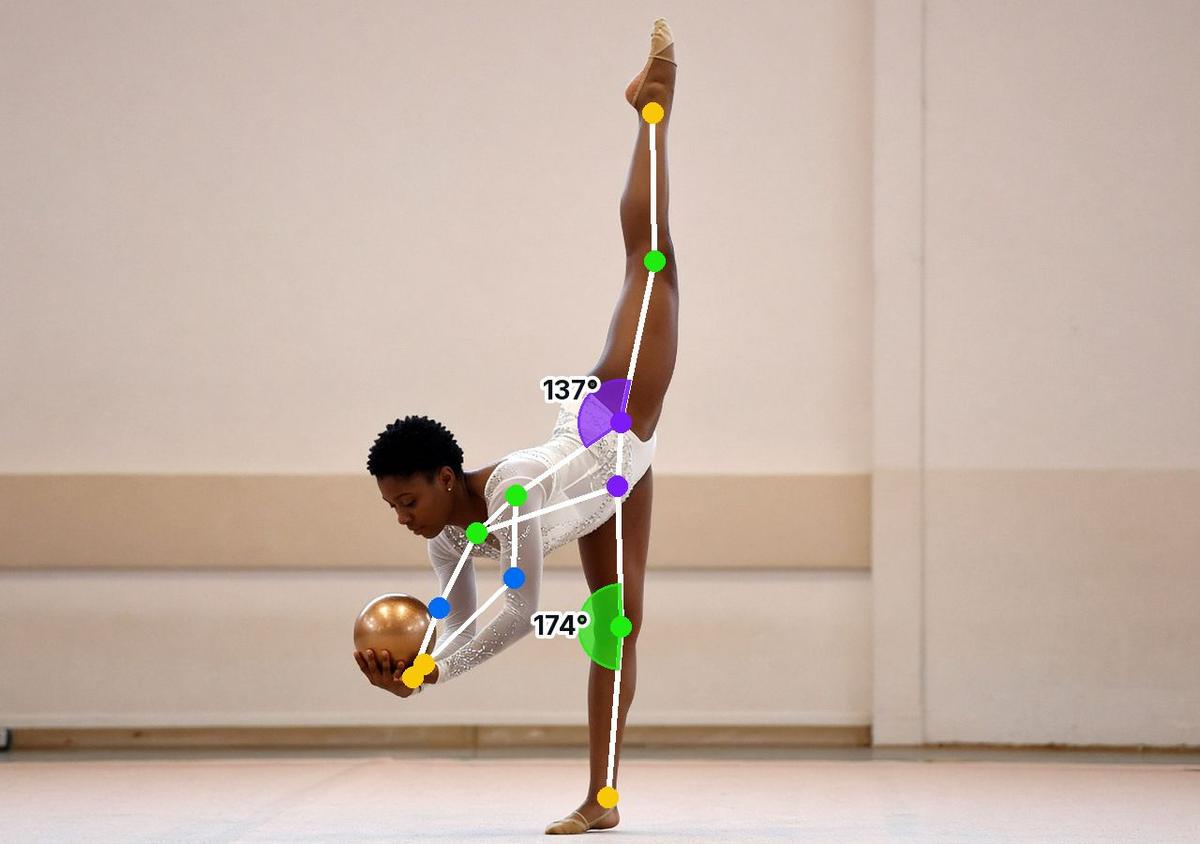
- A standing or supported needle / penché shape, from the side.
- A bridge or a back-bend shape that matches the kind of DB she is training, from the side.
- A straddle or side-split position, if her leaps and balances use that shape.
- Optional: a slow développé or kick to the front, side and back, so you can see active range, not only passive range on the floor.
Rules that make the clips comparable:
- Same camera height, same distance, same floor marks.
- Side-on for splits, needles and back bends. A front view hides the split angle and the arch.
- The whole body in frame, including the hands, the head and both feet.
- Film after a consistent warm-up, not sometimes cold and sometimes after a full ballet class.
- Do not let the gymnast "present" for the camera with a bent knee or a turned hip that she would not use in the element.
A still camera on a tripod or a bag is enough. Say the gymnast's name, the position and the date at the start of the clip. In Sprongo, a name spoken in the first 5 seconds is tagged automatically, so a season of flexibility clips can be found again.
Active range matters as much as the floor split
A beautiful floor split does not automatically become a valid leap or a stable balance. On video, compare the same gymnast's passive split with a slow kick or développé to that position, and then with the actual leap or balance.
Look for:
- Hip alignment: is the hip of the back leg opening or rolling out to buy range?
- Knees: are they extended, or is one knee bending to make the split look bigger?
- Torso: is the chest lifted, or is the gymnast collapsing toward the front leg?
- Control at the end of the movement: can she stop in the shape, or does the leg drop as soon as it arrives?
This is where many gymnasts get stuck. The floor range is there, but the active range is smaller, and the DB shape in the routine is smaller still. The footage makes that gap visible, which is more useful than adding another minute of passive stretching.
How to review Difficulty of Body shapes
When a leap, balance or rotation is being built, film the element on its own, then film it with apparatus later.
From a side-on view, pause at the moment the shape should be defined: the highest point of the leap, the still moment of the balance, the position maintained during a pivot. Check the same things you checked in the flexibility set: split angle, knee extension, hip square, ring closure or back-bend contact.
If the shape is not defined, the next training decision should be specific. Does she need more passive range, more active control, more time in the shape, or a simpler DB until the amplitude is there? Putting a higher-value element into a routine before the shape is consistent is a common way to lose both difficulty and execution.
SIVA, Sprongo's AI video assistant, can help with a focused question about the body, such as "Is my front knee straight at the lowest point of this split?" or "Is my back hip rotating open in this needle?" It reads 2D video, so camera position matters, and it does not decide whether a DB is valid under the Code. It supports the coach; it does not replace one.
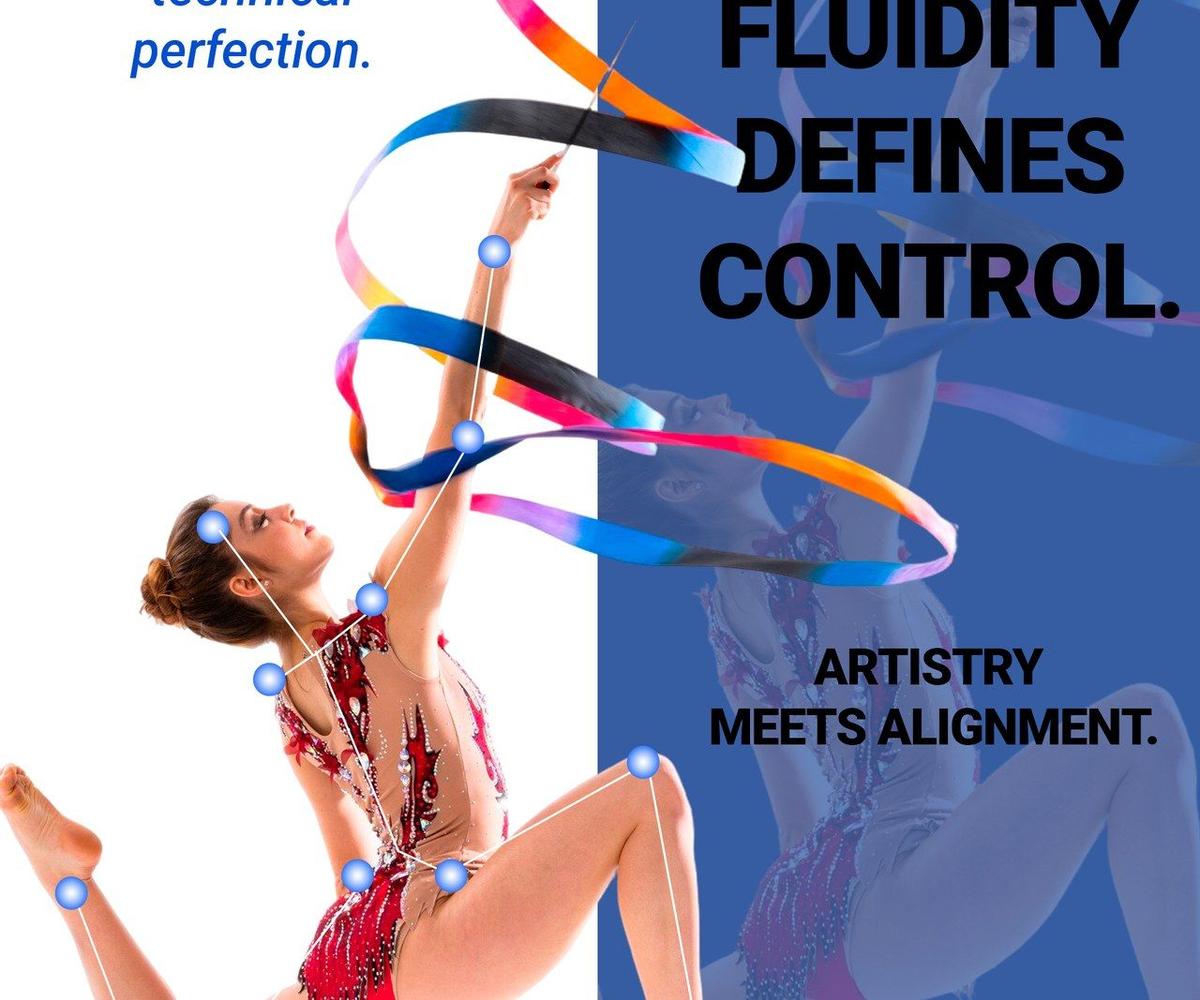
Path Track can trace an ankle or a hip, which is useful for kicks, développés and the path of the free leg into a balance. Use it to see whether the leg travels the same path each time, not as a substitute for looking at the shape itself.
Compare on a calendar, not only by memory
Flexibility changes slowly, and it also changes with fatigue, travel and growth. That is why memory is unreliable.
A practical rhythm is:
- A short flexibility film set every two to four weeks, from the same marks, after a similar warm-up.
- An element clip in the same session, so you can compare the floor range with the DB shape.
- A longer comparison at the start and the end of a training block.
In Sprongo, pick Compare, sync the two clips on the same position, and view them side by side or overlaid. Line them up on the same moment, such as the bottom of the split or the top of the leap. Comparing two shapes filmed from different angles is one of the fastest ways to fool yourself.
Save the clips in a playlist for that gymnast, tagged by position. Draw on the frame to show a hip line or a knee, or leave a voice note. Share the exact moment so the conversation is about the picture, not about a feeling from last Tuesday.
How to use the footage in training
The review should change the next practice, not sit in a camera roll.
- If the floor split is short of the shape you need, the work is range, with care, and usually with a coach's eye on hip position.
- If the floor split is there but the kick or leap is not, the work is active control: slower développés, holds, and strength around the hip, not only more time in a passive split.
- If the shape appears and then disappears as soon as the apparatus starts, the work is combining the two, not adding a harder DB.
- If one side is clearly behind the other, film both sides every time so the gap stays visible.
None of this replaces a qualified coach or, when pain is involved, a qualified medical professional. Flexibility work can be overdone. If a gymnast has pain, stop the test and get it checked. Video is a record of positions, not a license to force them.
Common mistakes
- Filming from the front, which hides the split and the back bend.
- Changing the camera distance or the height of an oversplit block from week to week.
- Filming only the gymnast's better side.
- Reviewing a cold clip against a fully warmed-up one and calling it progress, or the reverse.
- Treating a deeper floor split as proof that a DB is ready.
- Correcting five things in one stretch session. Pick one: hip square, knee extension, or the height of the back leg.
Frequently asked questions
How often should we film flexibility? Every two to four weeks is enough for most gymnasts, plus a clip when you are deciding whether a new DB belongs in the routine. Daily filming rarely shows a real change and becomes noise.
Should we film flexibility in a leotard or in training clothes? Either is fine, as long as you can see the hips, knees and spine. What matters is repeating the same setup.
Can video tell us if a Difficulty of Body will be counted? No. Judges apply the current Code in a competition. Video can show whether a shape looks defined in training, which is the right question to ask before you put the element in the routine.
What if the gymnast is still growing? Growth can change range and control for a while. Keep the camera setup consistent and compare over months, not only week to week.
Is this the same as a general flexibility program for other sports? No. The positions and the standard for a defined shape are specific to rhythmic gymnastics. Filming consistent tests is still useful in any sport that depends on range.
Start with one position this week
Choose one position the gymnast already trains, film it from the side after a normal warm-up, and save the clip. In two to four weeks, film it again from the same spot and compare. Then film the DB that uses that range and see whether the element is catching up with the shape on the floor.
Get Sprongo · App Store · Google Play
Coaching a club? See team plans.