Why apparatus work needs its own video
Body elements are only half of a rhythmic gymnastics routine. The hoop, ball, clubs, ribbon and, in some programs, the rope have to stay in a relationship with the body the whole time: in a clear plane, on time, and still under control in a leap, balance or rotation.
That is hard to judge in the moment. A hoop that tilts off its plane, a ribbon that slumps into a heap, or a club catch saved with the forearm all happen too quickly for the eye, and the gymnast often feels a save as a clean catch. Video lets you pause the release, the flight and the catch, and talk about one specific thing before the next turn.
This guide is about filming and reviewing apparatus technique, not a Code of Points walkthrough. For leaps, balances and rotations, see our guide to analyzing body elements. Always check the current FIG Code of Points, or your federation's rules, for what is valid in this cycle.
A stable way to film apparatus
The camera has to see the gymnast and the apparatus, including the space the apparatus travels through. A ribbon snake or a hoop throw needs more frame than a balance on its own.
- Keep the camera still. A tripod, a folded chair or a bag on the floor is better than handheld.
- Start wider than you think. If the ribbon or a thrown hoop leaves the shot, you cannot review the pattern or the catch.
- Put the camera at about chest to head height, not on the floor pointing up.
- Film from the same spot each session so you can compare later.
- Light the gymnast from the camera side. A bright window behind her turns the ribbon and the hoop into silhouettes.
- Record short, focused clips: one throw series, one roll sequence, one mills set. Full routines are useful later, but they make every detail small.
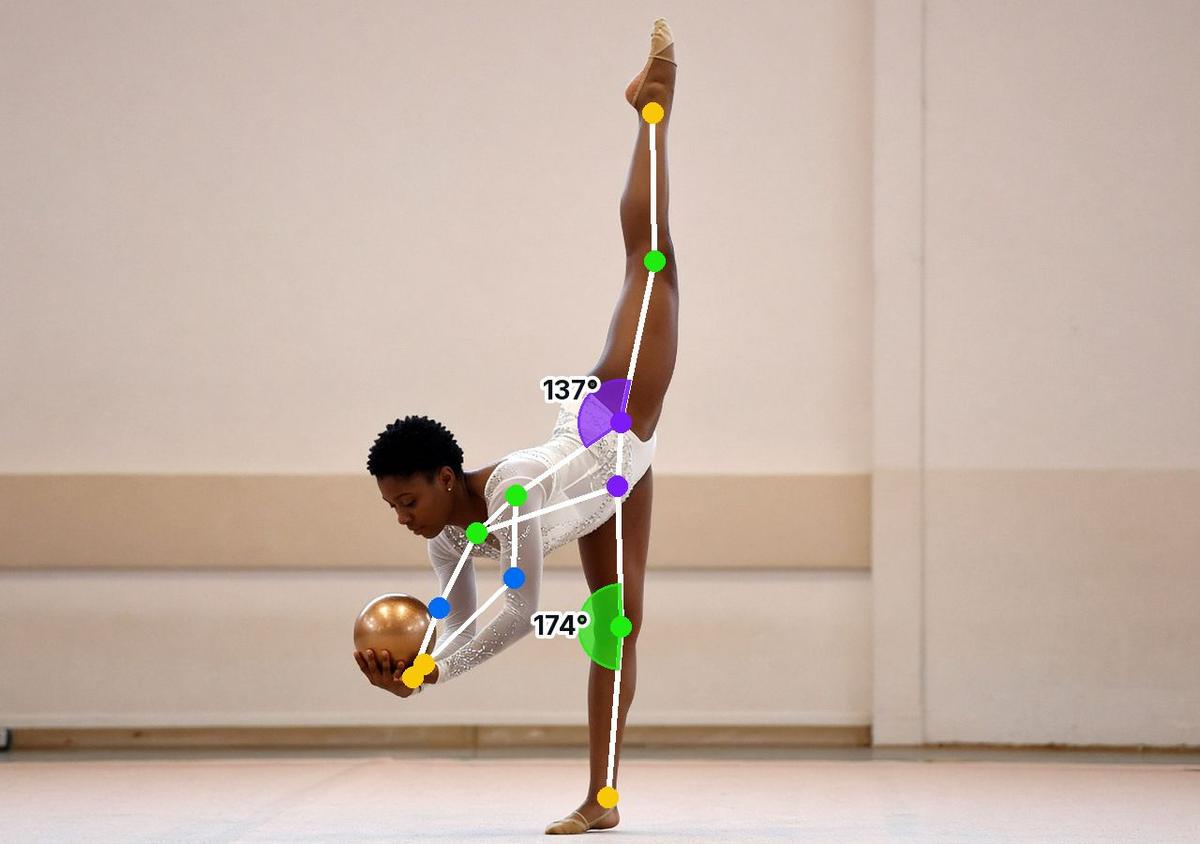
Two views cover most work. A side-on view shows the plane of a hoop or club circle, the height of a throw and whether a body shape is actually a split. A slightly front-on or 45-degree view shows whether a ribbon pattern is even, whether a ball roll stays on path, and whether a catch is in the hand. If you only have one camera, keep one view for the whole block, then change it on the next block.
In a busy gym, say the gymnast's name in the first few seconds of the clip. In Sprongo, a name spoken in the first 5 seconds is tagged automatically, so apparatus clips do not disappear into a pile of unnamed files.
What to look for on each apparatus
Watch each clip once at full speed, then slow it down. Full speed tells you whether the work has rhythm and flow. Slow motion tells you whether the plane, the shape and the catch were actually clean.
Hoop
The hoop has to keep a clear shape and a clear plane. On video, check:
- Plane: does the hoop stay in the intended plane during swings, rotations and transmissions, or does it wobble and flatten?
- Shape: is the hoop open and round, or does it fold or bounce out of shape on the floor or the body?
- Throws and catches: is the hoop leaving a consistent point, and is the catch in the hand rather than trapped against the forearm or the hip?
- Relationship with the body: during a leap or a rotation, is the hoop still doing a recognizable technical element, or is it being held still as a decoration?
A useful question on a hoop clip is, "Does the hoop stay in one plane from the start of this swing through the catch?" That is a clearer review than "Was the hoop work good?"
Ball
The ball should look soft in the hands and precise in the air. On video, check:
- Grip: is the ball resting in the hand, or squeezed and held with both hands when the Code expects a one-hand or rolling action?
- Rolls: does the roll travel in a straight path along the intended body surface, or does it fall off early?
- Bounces: is the bounce height and direction repeatable, and is the gymnast already in position for the next action?
- Throws and catches: does the ball leave cleanly, and is the catch quiet, without a clutch to the chest?
If the ball disappears in bright light, move the camera or change the background so it stays visible against the floor.
Clubs
Clubs punish rushed arm work. On video, check:
- Mills and circles: are both clubs describing even circles in the intended plane, with the heads and the bodies of the clubs matching each other?
- Asymmetry: when the clubs are supposed to do different jobs, is each one actually doing its job, or has one club stopped?
- Throws and catches: do the clubs rotate the intended number of times, and are they caught in the hands rather than trapped against the body?
- Hands and wrists: are the wrists relaxed enough to keep the clubs moving, or are the clubs being muscled into place?
Film mills from a slightly front-on view so you can see both clubs. A pure side view can hide the farther club.
Ribbon
The ribbon is the apparatus that most often leaves the frame, and the one that most often looks better in the gym than it does on video. On video, check:
- Pattern: are snakes and spirals even, with a consistent depth, or do they collapse into a pile?
- Motion: does the ribbon stay alive between patterns, or does a length of it go slack on the floor?
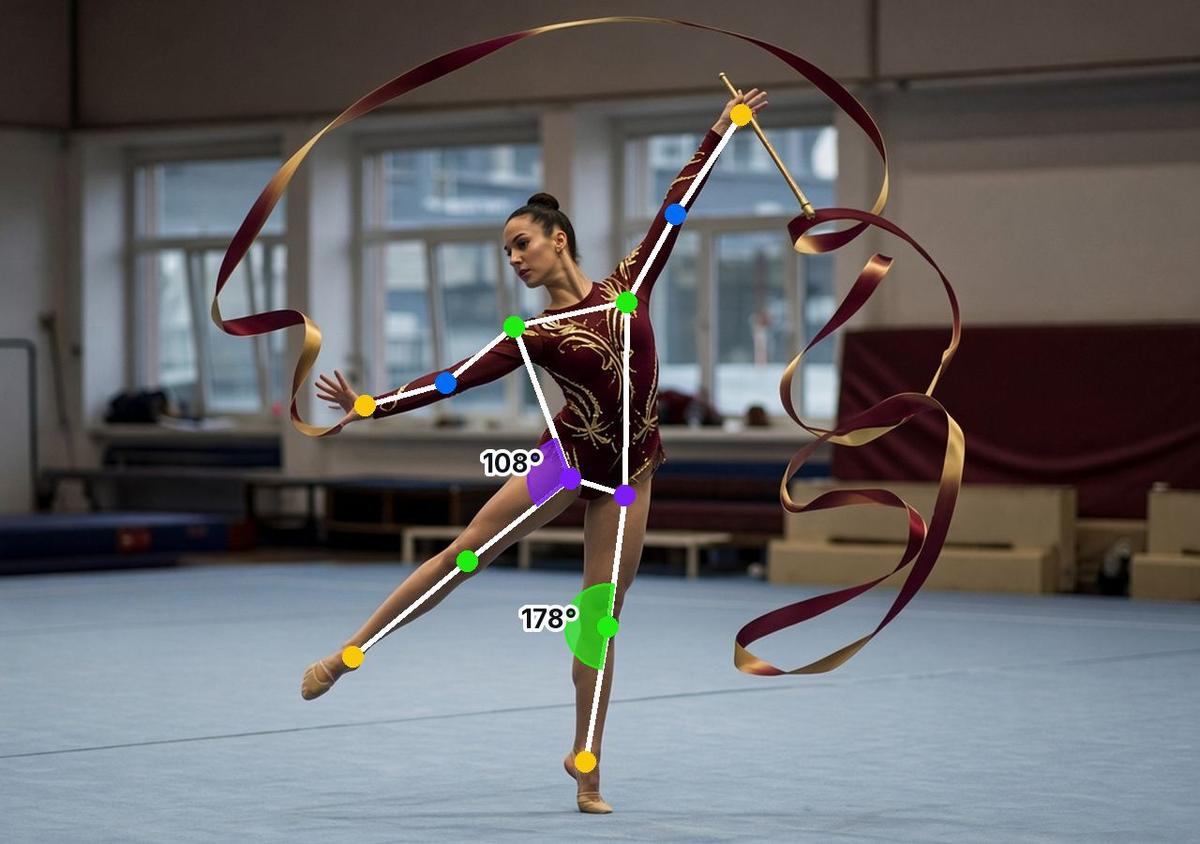
- Stick work: is the stick an extension of the arm, and are echapés and boomerangs finishing in a controlled catch?
- Space: is there enough of the ribbon in frame to judge the pattern? If not, the clip is not a fair review. Move the camera back and film that series again.
Ribbon also shows problems the gymnast cannot feel, such as a knot starting to form or the ribbon wrapping the body during a turn. Pause there and decide whether the next drill is a slower pattern, a different plane, or a simpler body element under the same ribbon work.
Rope, when it is in the program
Rope still appears in some junior and national programs. Film it the same way: the whole rope and the whole gymnast, with enough floor to see skips, wraps and releases.
Apparatus and body elements together
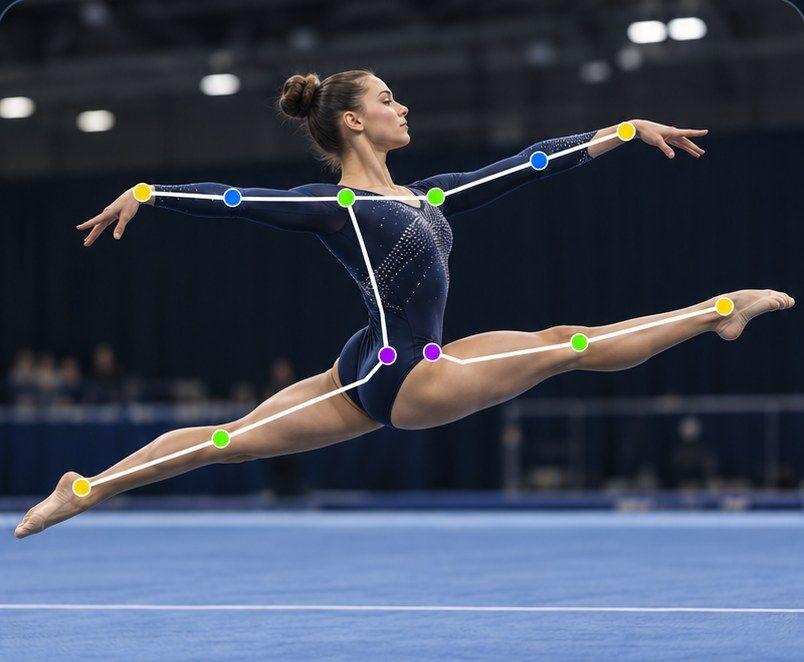
In the current FIG Code of Points (2025–2028), a Difficulty of Body (DB) has to be performed with a recognized apparatus technical element. Isolated body drills and isolated apparatus drills are useful, but they are not enough on their own. Once a drill is clean, film the same body shape with the apparatus doing its job: a split leap with a hoop rotation, a balance with a ball roll, a pivot with a ribbon pattern.
Review one thing at a time. First, is the body shape defined? Second, did the apparatus element actually happen during that shape, or only before or after it?
SIVA, Sprongo's AI video assistant, can answer a focused question about the body in the clip, for example, "At the highest point of this leap, is my back leg as high as my front leg?" It reads 2D video of the body, so it does not score apparatus difficulty or replace the Code of Points. Path Track can trace a wrist or an ankle, so you can see whether a catch or a roll happened in a repeatable place.
A simple review routine
- Film three to five repeats of one apparatus action from the same spot.
- Watch them once at full speed and pick the best and the weakest.
- Compare those two in slow motion, lined up on the same moment: the release, the catch, or the start of the pattern.
- Choose one correction: plane, path, catch, or the body shape underneath the apparatus.
- Film another short set and check whether that one thing changed.
In Sprongo, pick Compare from any clip, sync the two attempts and view them side by side or overlaid. Draw on the frame or leave a voice note, and share that exact moment so the feedback stays attached to the video.
Once a month, compare a current throw or roll with one from the start of the season. Apparatus skill can improve slowly, and a side-by-side clip is often the first time a gymnast sees that the catch has actually gotten quieter.
Common mistakes
- Filming only full routines, so throws and ribbon patterns are tiny and often leave the frame.
- Standing too close, especially for ribbon and hoop throws.
- Changing the camera angle every turn, which makes comparison unfair.
- Reviewing only in slow motion, which can make a rushed pattern look more controlled than it was.
- Correcting the body and the apparatus at once. Pick one.
- Letting the gymnast narrate "that felt good" and stopping the review there. Look at the catch.
For club and parent filming workflows, see our parent filming guide and club feedback guide.
Frequently asked questions
Do I need a special camera to review apparatus work? No. A phone on a still surface is enough, as long as the gymnast and the apparatus stay in frame. Use a wider shot for ribbon and throws than you would for a single balance.
Can I film from the stands at a competition and still learn something? Yes, for a general impression of throws, rhythm and large pattern errors. For plane, grip and quiet catches, training footage from a consistent closer spot is more useful.
Should I film every apparatus in the same session? It is better to film one apparatus well than four poorly. If time is short, pick the least consistent apparatus and take a few clean repeats.
Does SIVA judge hoop, ball or ribbon difficulty? No. SIVA answers a focused question about the body in the clip. It does not award Difficulty of Apparatus values or official scores.
How often should we compare clips? Compare in the same practice to check whether a cue worked, and every few weeks to see whether the skill is actually improving.
Try it on the next apparatus rotation
Pick one apparatus and one action. Film three repeats from the same spot, compare the best and the weakest, and take one cue into the next turn.
Get Sprongo · App Store · Google Play
Coaching a club? See team plans.